
Skylight Glass
Overhead glazing: a glass roof or rooflight bringing daylight in from above. Because the pane sits over people, the safety requirements differ from any vertical glazing, and lamination is a requirement rather than an option.
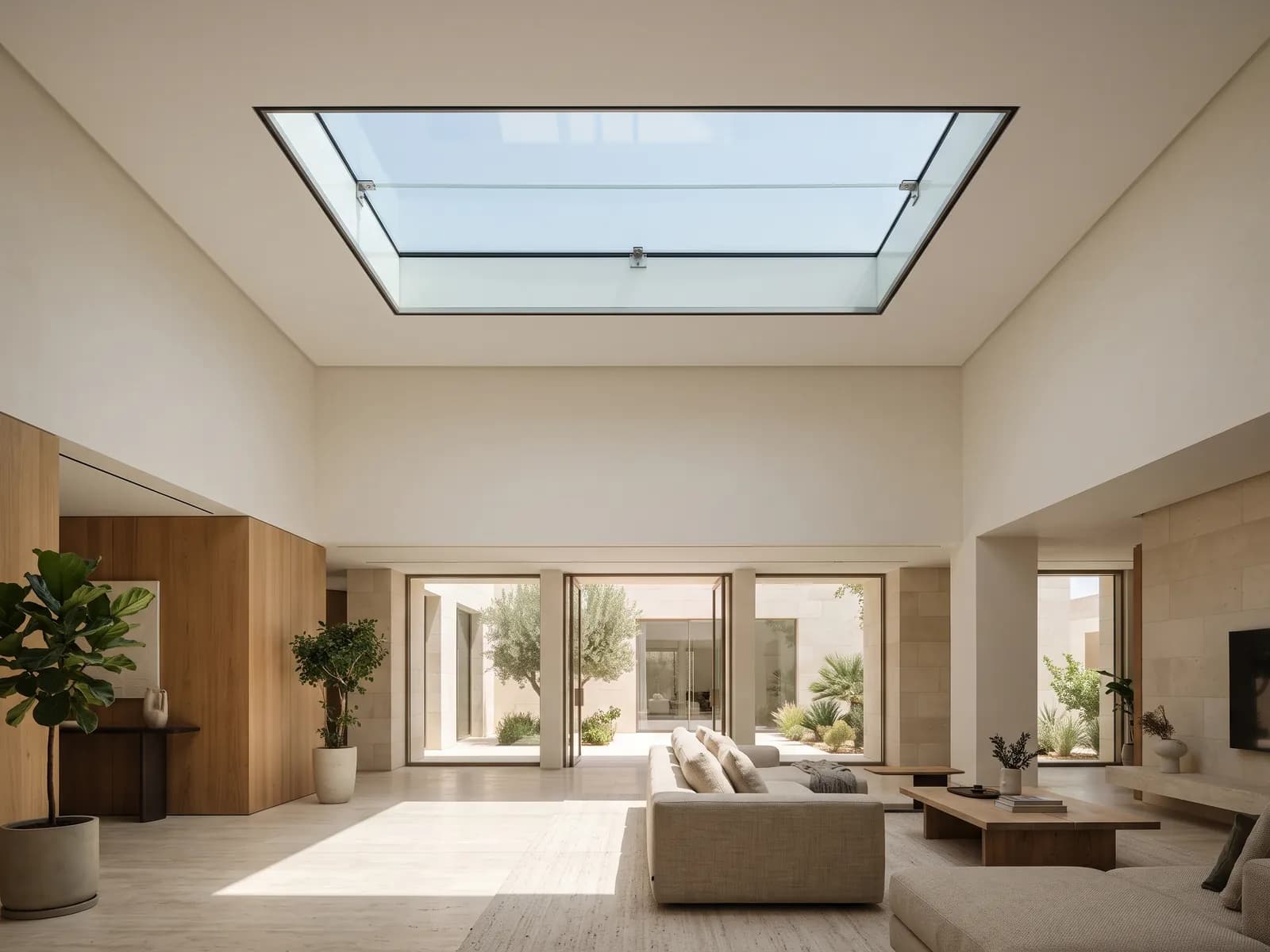
A skylight is horizontal or sloped glazing installed in a roof. The essential difference from a window is that the pane is overhead: any breakage means glass falling on whoever is below.
The rule that cannot be waived
The lower layer of any overhead glazing must be laminated. Tempered glass alone is not enough here: when it breaks it crumbles into granules, and granules fall. In laminated glass the interlayer holds the fragments, so the pane stays in place even after breakage.
| Build-up | Suitable for a skylight? |
|---|---|
| Annealed glass | No |
| Single tempered | No - crumbles and falls |
| Laminated | Yes |
| Insulating unit with laminated inner pane | Yes, and best thermally |
Heat in Riyadh's climate
A skylight faces the sun directly for more of the day than any wall, and the horizontal angle means higher solar gain than any vertical facade. Overhead glazing in plain clear glass turns the space beneath it into a heat trap.
Skylights are therefore normally built as insulating units carrying a solar control coating, sometimes with a tinted inner pane to cut direct glare.
Execution details
- Enough slope to shed water and dust; a perfectly flat surface collects grit.
- Perimeter drainage for condensation inside the frame.
- Cleaning access planned from the start, not after installation.
Where it is used
- Internal courtyards and rooflights over stairwells.
- Hall and corridor roofs.
- Sloped glazing and glass domes.
Key Advantages
- Laminated inner layer, always
- Solar control coating for heat
- Considered slope and drainage
Applications
- Internal courtyards
- Hall and corridor roofs
- Domes and sloped glazing
Frequently Asked Questions
Is tempered glass enough for a skylight?
No. Single tempered glass breaks into granules that fall, so the inner pane of any overhead glazing must be laminated.
How do I reduce skylight heat in summer?
Choose a double glazed unit with a solar control or Low-E coating, and compare the solar heat gain coefficient and light transmission together rather than simply darkening the glass.
Why must skylight glass be laminated?
Because the pane is overhead. Tempered glass crumbles into granules when it breaks, and granules fall on whoever is below. In laminated glass the interlayer holds the fragments, so the pane stays in place even after breaking. The lower layer of any overhead glazing must be laminated.
Does a skylight make the space beneath it very hot?
With plain clear glass, yes. A skylight faces the sun for more of the day than any wall, and the horizontal angle means higher solar gain than any vertical facade. It is therefore normally built as an insulating unit with a solar control coating, sometimes with a tinted inner pane to cut glare.
Does a skylight need a slope?
Yes. Enough slope sheds water and dust; a perfectly flat surface collects grit and holds water. Perimeter drainage for condensation inside the frame is planned as well, and cleaning access is settled before installation rather than after.
Related Guides
Skylight Glass in Riyadh: Letting Daylight In While Limiting Heat and Keeping Glass Overhead Safe
Skylights in Riyadh are usually double glazed: a tempered outer pane with solar control or Low-E coating and a laminated inner pane that stays in place if broken. Single tempered or ordinary glass is not suitable overhead, and slope, drainage and cleaning are planned from the start.
1 November 2026 · 5 min read
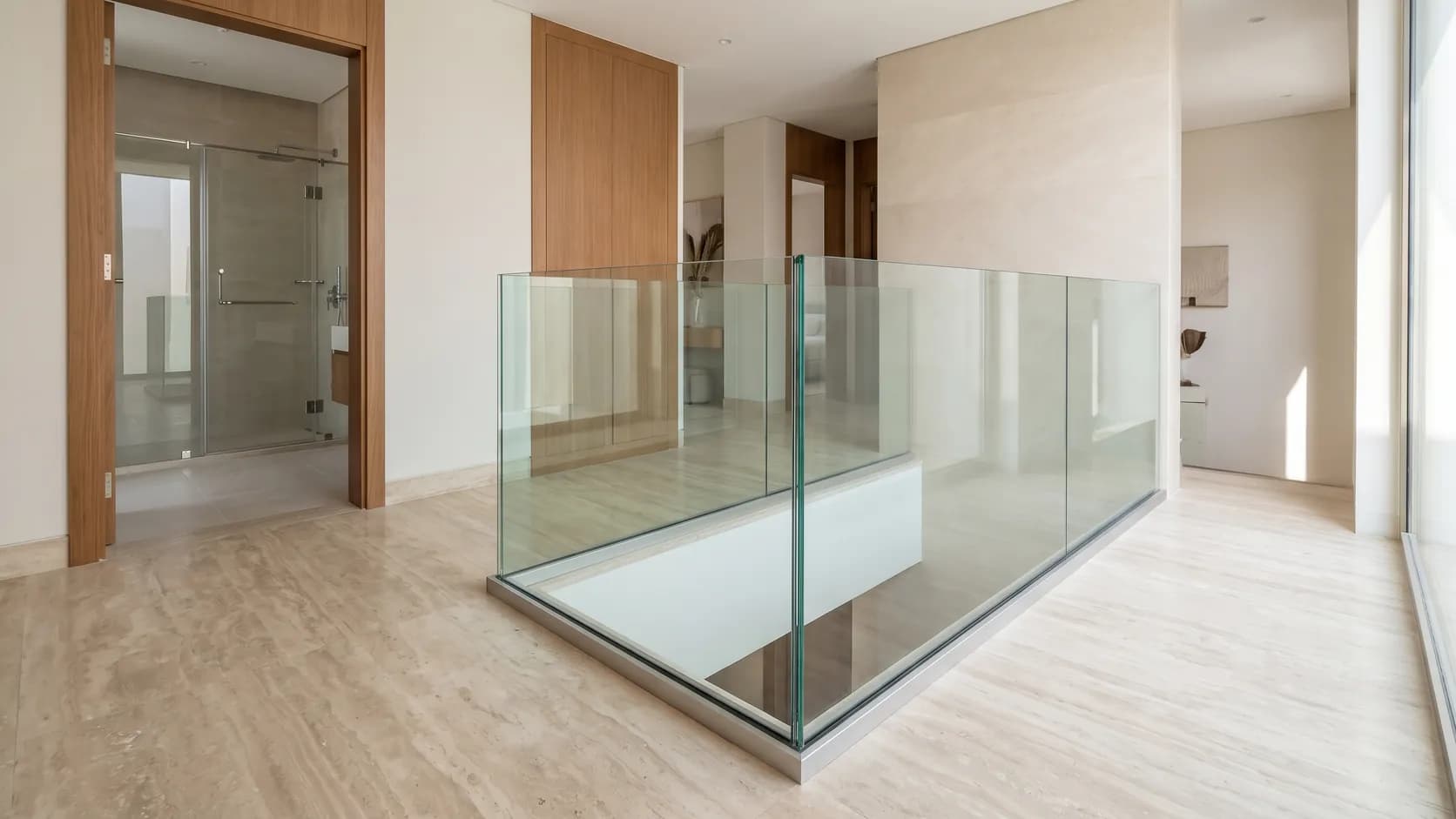
Tempered or Laminated? A Selection Guide
Both are safety glass but they solve different problems. The question is not which is stronger but what happens when the pane breaks: tempered falls, laminated stays in place.
1 August 2026 · 6 min read
Request a Quote
Request a Quote