
High Performance Glass
Glass with a solar control coating that intercepts direct solar gain before it enters, while keeping usable daylight. The target is a low SHGC with a high light-to-solar-gain ratio. 6 mm.
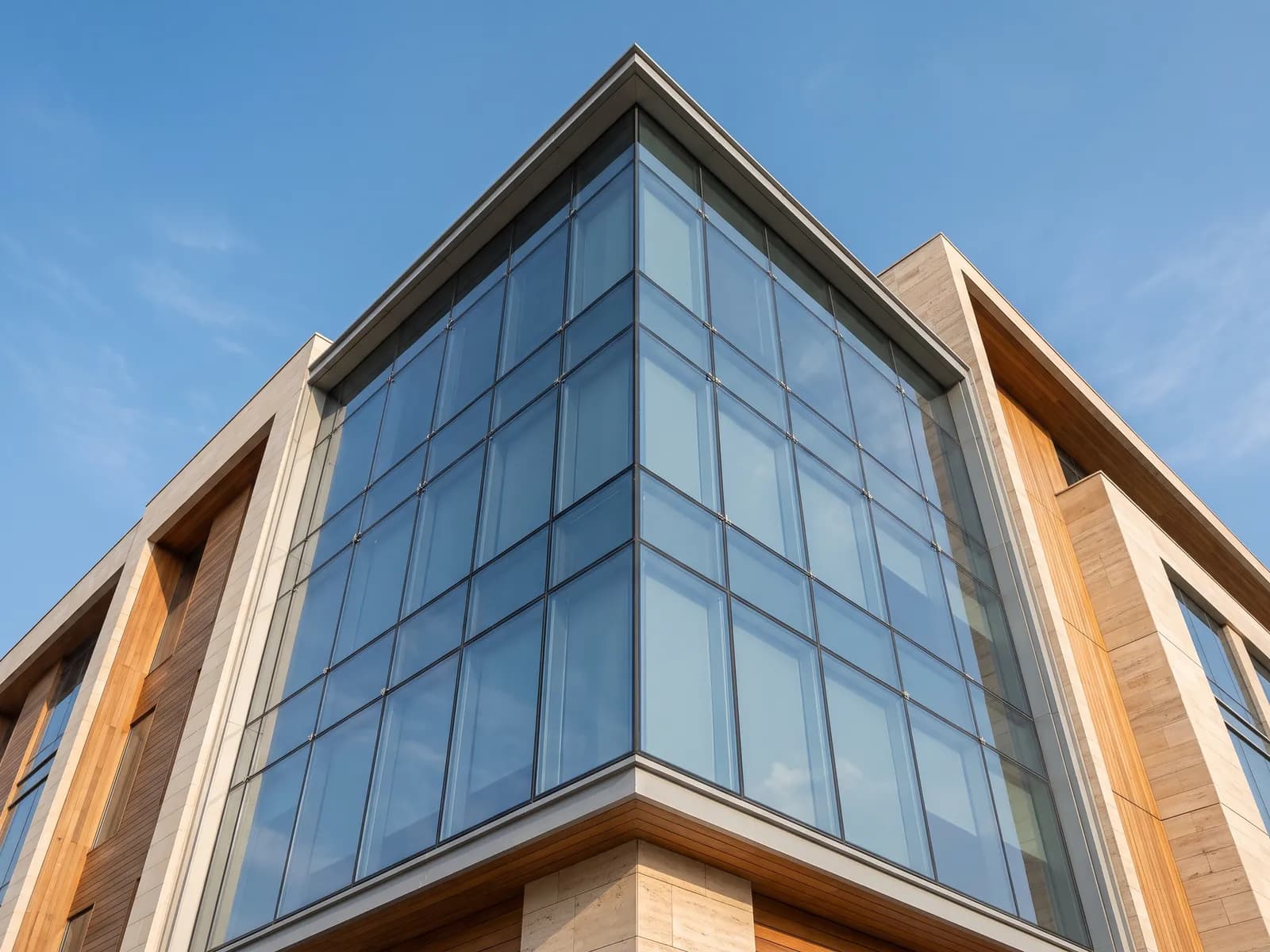
High performance glass carries a coating that acts on incoming solar radiation: it reflects and absorbs most of the sun's energy before it crosses into the building.
The figure that measures this is SHGC - solar heat gain coefficient. A value of 0.25 means only a quarter of the incident energy reaches the interior.
The two numbers that matter
| Figure | What it measures | Direction wanted |
|---|---|---|
| SHGC | Share of solar energy transmitted | Low |
| VLT | Share of visible light transmitted | As high as the design allows |
| LSG | Ratio between the two | High |
A high LSG ratio is the whole point: plenty of daylight, little heat. Very dark glass lowers SHGC but lowers daylight with it, so artificial lighting runs during the day and one load simply replaces another.
How it differs from Low-E
- Low-E addresses heat transfer through the window in both directions - the U-value.
- Solar control addresses energy arriving from the sun - the SHGC.
On a facade in direct Riyadh sun the dominant load is usually direct solar gain, so specification starts here. Both coatings are combined in a single insulating unit where required.
Installation considerations
- The coating has a specific face inside the unit; installing it reversed cancels the designed performance.
- High absorption raises pane temperature, which can make tempering necessary.
- External reflectance is part of the building's appearance and should be assessed visually before approval.
Where it is used
- Glazed facades in direct sun.
- Office buildings with large glazed areas.
- Projects assessed on envelope thermal performance.
Key Advantages
- Low solar heat gain coefficient
- High light-to-solar-gain ratio
- Stops heat before it enters
Technical Specifications
| Thickness | 6 mm |
|---|
Applications
- Sun-exposed facades
- Office buildings
- High performance insulating units
Frequently Asked Questions
What does SHGC mean?
Solar heat gain coefficient: the share of incident solar energy that passes to the interior. A value of 0.25 means only a quarter gets through. The lower the figure, the less heat load enters.
Is darker glass always better?
No. Very dark glass lowers SHGC but lowers visible light with it, so artificial lighting runs during the day and one load simply replaces another. The right measure is the LSG ratio: plenty of daylight with little heat.
Does the orientation of the coated pane matter?
Yes, and it is decisive. The coating has a specific face inside the insulating unit; installing it reversed cancels the designed performance entirely even though the pane looks correct. The face orientation is therefore fixed at fabrication, not on site.
Related Guides

Request a Quote
Request a Quote