
Low-E Glass
Glass with an extremely thin transparent metallic coating that reflects thermal infrared while letting visible light through. It cuts heat transfer across the window, lowering cooling load without darkening the room. 6 mm.
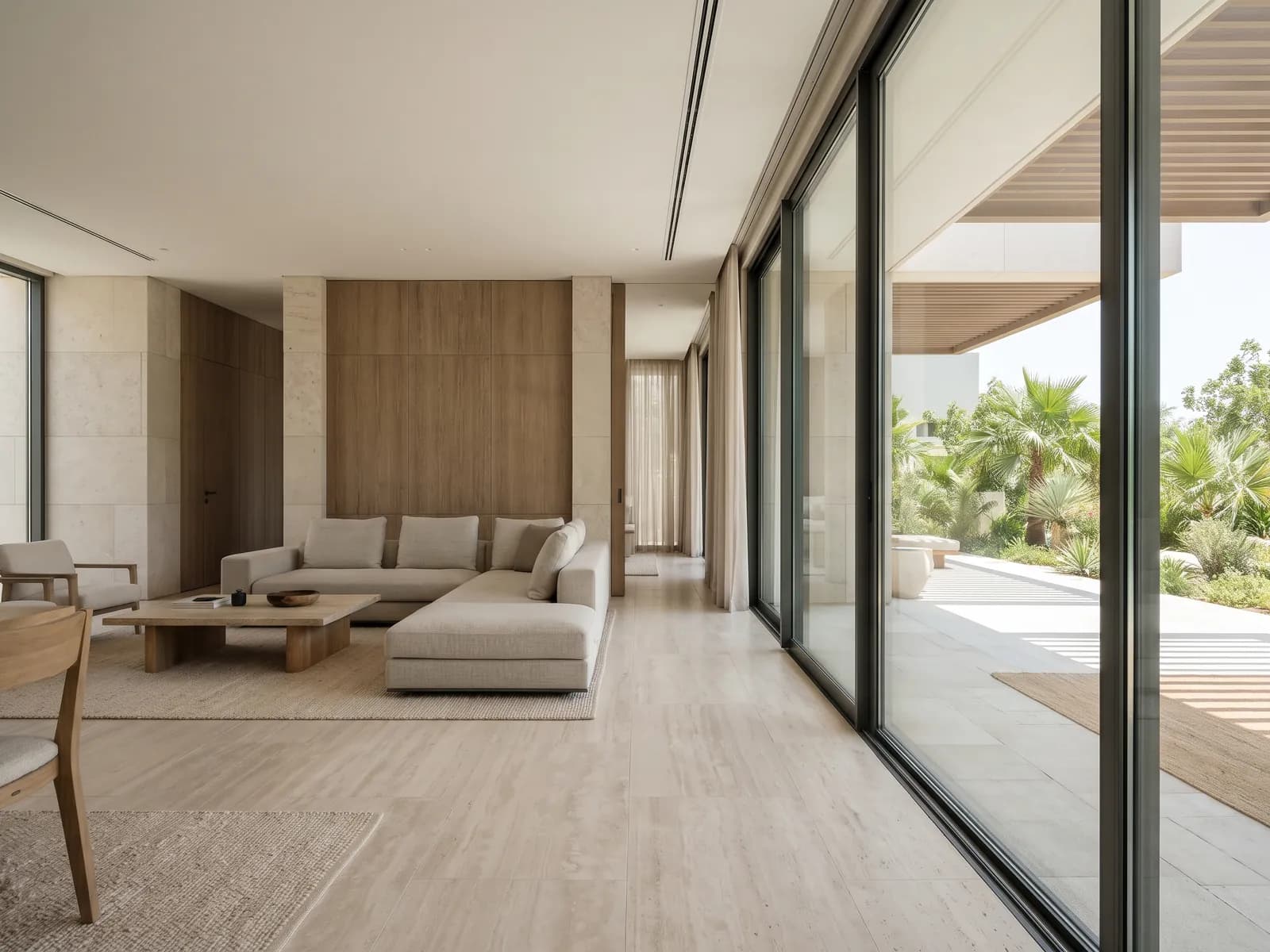
Emissivity is a surface's ability to radiate heat. Ordinary glass has high emissivity - around 0.84 - meaning it re-radiates absorbed heat into the building. A low-emissivity coating drops that figure below 0.1.
The result is direct: the window passes visible light and blocks the thermal part of the spectrum.
How it differs from tinted glass
| Tinted | Low-E | |
|---|---|---|
| Mechanism | Absorbs energy | Reflects thermal infrared |
| Daylight admitted | Reduced | Stays high |
| Pane temperature | Runs hot | Stays cooler |
| The room | Darkens | Stays bright |
It does not work outside a sealed unit
A soft-coat low-E layer is a fine silver film that oxidises on contact with air and moisture. It must sit inside a sealed insulating unit, on a surface facing the cavity. A single exposed low-E pane loses its performance.
This is not a technical footnote: it is why low-E is always specified as part of an insulating unit rather than as a standalone pane.
Low-E or high performance glass?
They answer different questions:
- If the problem is heat transfer through the window - the U-value - the answer is low-E.
- If the problem is direct solar gain - sun striking the facade, the SHGC figure - the answer is high performance glass with a solar control coating.
In Riyadh's climate both problems usually apply at once, and both solutions are combined in a single unit.
Where it is used
- Insulating units in residential and office facades.
- Large windows that need to stay bright.
- Projects targeting reduced cooling consumption.
Key Advantages
- Emissivity below 0.1
- Passes light, blocks heat
- Lowers cooling load
Technical Specifications
| Thickness | 6 mm |
|---|
Applications
- Insulating glass units
- Residential and office facades
- Large windows
Frequently Asked Questions
Is dark glass better for heat?
Not necessarily; it absorbs heat and reduces light, while selective Low-E lowers heat gain and keeps the daylight.
Can Low-E glass be used as a single pane?
Not a soft coating. The fine silver layer oxidises on contact with air and moisture, so it must sit inside a sealed insulating unit on a surface facing the cavity. A single exposed pane loses its performance.
Does Low-E glass make the room darker?
No, and that is its strength. The coating reflects thermal infrared while passing visible light, so the room stays bright while heat transfer drops. Tinted glass does the opposite: it reduces heat and daylight together.
Low-E or solar control glass?
They address different problems. Low-E addresses heat transfer through the window - the U-value. Solar control addresses energy arriving directly from the sun - the SHGC. On a sun-exposed facade in Riyadh both usually apply, so the two are combined in a single unit.
Related Guides
Request a Quote
Request a Quote