
Skylight Glass in Riyadh: Letting Daylight In While Limiting Heat and Keeping Glass Overhead Safe
November 1, 2026 · 5 min read
Skylights in Riyadh are usually double glazed: a tempered outer pane with solar control or Low-E coating and a laminated inner pane that stays in place if broken. Single tempered or ordinary glass is not suitable overhead, and slope, drainage and cleaning are planned from the start.
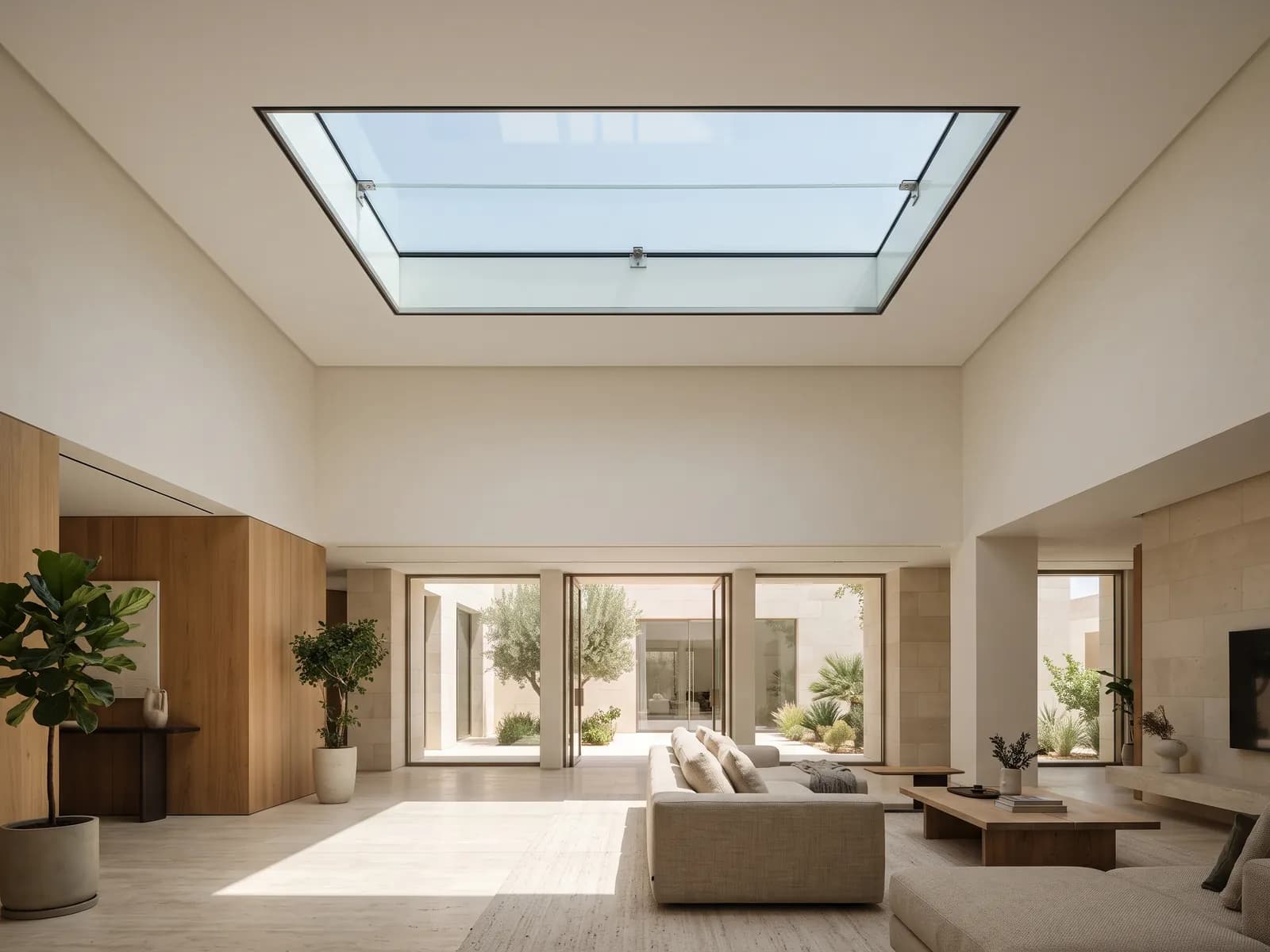
Skylight glass in Riyadh is usually an insulated double glazed unit: a tempered outer pane with a solar control or Low-E coating, and a laminated inner pane that stays in place if it breaks. That lets daylight in while limiting heat and glare, and keeps glass from falling on anyone below. Single tempered glass or ordinary clear glass is not suitable for a roof.
Why does a skylight get hotter than a window?
A skylight gets hotter than a window because horizontal glass faces the sun directly for most of the day, while a vertical facade receives sun at an angle and only for part of the day. In a Riyadh summer the sun is close to overhead at midday, so a glass roof receives the most radiation of any glazing in the building.
Clear ordinary glass therefore turns a skylight into a heat trap: the cooling load rises and glare bothers anyone sitting in the hall or inner courtyard below. The fix starts with the choice of glass, before anyone thinks about blinds.
What glass build-up suits a roof?
The right build-up for a roof is a double glazed unit whose inner pane is always laminated, because that is the pane above people's heads. This table compares the common options:
| Build-up | Safety overhead | Heat and glare | Suitable for a skylight? |
|---|---|---|---|
| Single ordinary glass | Breaks into sharp shards that fall | Poor | No |
| Single tempered | Breaks into granules that fall | Poor | No |
| Single laminated | Stays in place when broken | Moderate with a tinted layer | Yes, for small or shaded openings |
| Double glazing with a laminated inner pane | Stays in place when broken | Best with solar control or Low-E | Yes, and best thermally |
The outer pane is usually tempered to handle heat and impact, and carries a Low-E or solar control coating. The thickness of each pane depends on size, slope and the support method, and is set by the project designer, not by a general table.
How do you limit heat without losing light?
You limit heat without losing light by choosing glass that passes visible light while reflecting a large share of solar heat, which is what solar control coatings and high-performance glass do. When comparing, ask the supplier for two values for each build-up, light transmission and the solar heat gain coefficient (SHGC or g-value), and compare them together.
Glare has other answers: a white translucent PVB interlayer in the laminated pane spreads light softly, or a lightly tinted inner pane can be used. These help over living rooms and majlis areas where direct sun bothers the eye, while clear glass suits courtyards and corridors.
Which execution details prevent problems later?
Three execution details prevent problems later: slope, drainage and cleaning access. A completely flat glass roof collects dust, sand and rainwater, so it is designed with enough slope to shed water and dust.
- Slope: lets rain wash off some of the dust and reduces the stains left after the dust season.
- Condensation drainage: a channel inside the frame collects condensation and carries it out.
- Cleaning: safe access to the outer surface is planned from the start, not after installation.
- Support: frames and profiles designed for the weight of the glass and maintenance loads, with gaskets that keep glass from touching metal.
For an example of overhead glazing, see our curtain wall and skylight project in Al Muzahmiyah, where daylight comes from the roof deep into the residence; the details of every roof are set by its own project specification. At our factory in Riyadh we temper and laminate glass and produce double glazed units, and installation is also available.
Frequently asked questions
Is tempered glass enough for a skylight?
No. Single tempered glass breaks into granules that fall, so the inner pane of any overhead glazing must be laminated.
How do I reduce skylight heat in summer?
Choose a double glazed unit with a solar control or Low-E coating, and compare the solar heat gain coefficient and light transmission together rather than simply darkening the glass.
Should a skylight be sloped?
Yes, enough slope to shed water and dust is recommended; a completely flat surface collects sand and stains.
Can glare from a glass roof be reduced?
Yes, with a white translucent PVB interlayer that diffuses light, or a lightly tinted inner pane.
For a villa skylight or inner courtyard roof, send the opening size and slope through the quote request form and we will propose a suitable build-up.
Share this guide
Related Products
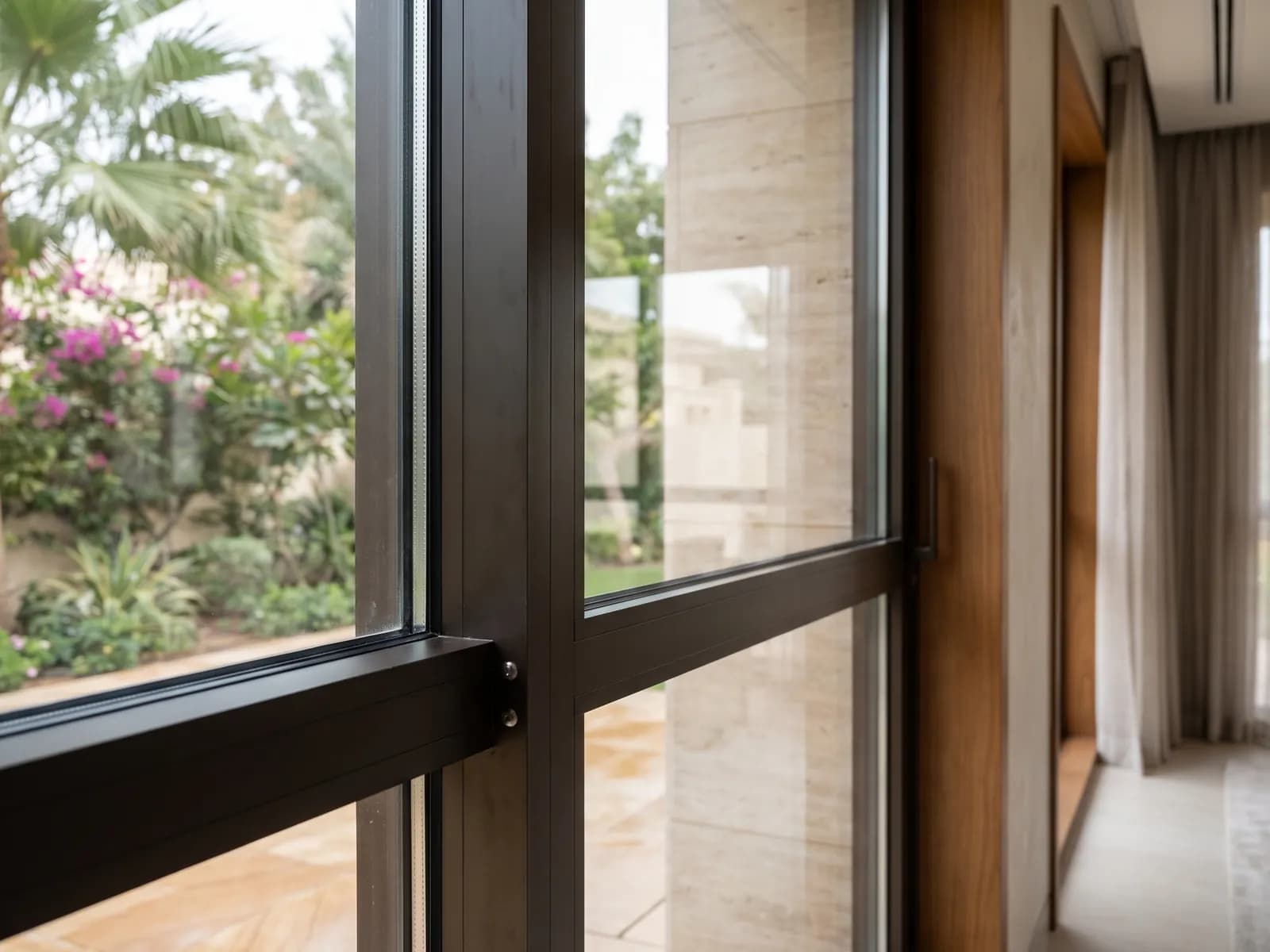
Double Glazed Insulated Glass
ALFA STAR for Glass makes double glazed insulated glass units to size in its Riyadh factory, for windows, facades and skylights in Riyadh and across Saudi Arabia. Double glazed unit with an argon-filled cavity, cutting heat transfer noticeably in Gulf climates.
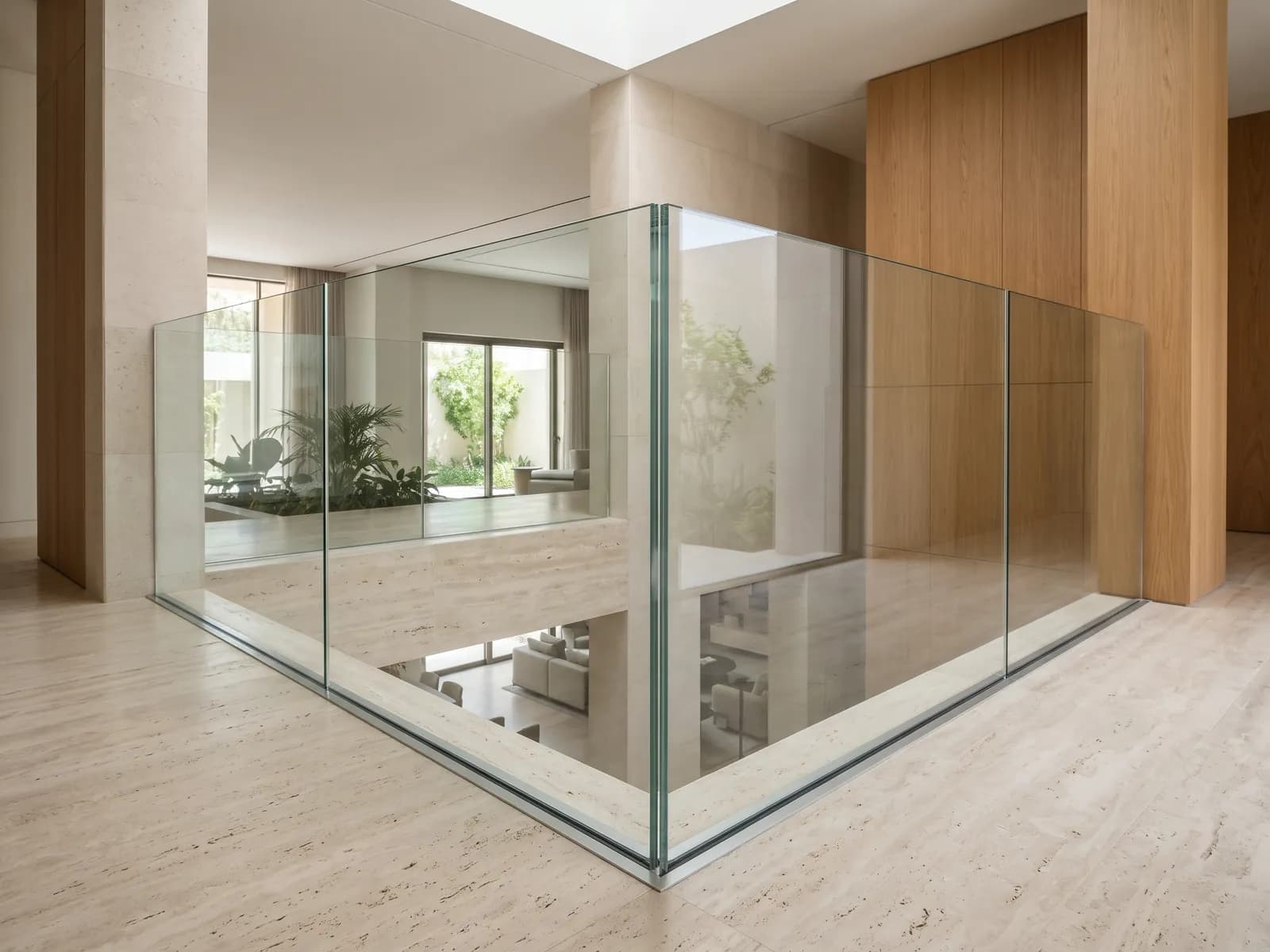
Laminated Glass
Two glass panes bonded by a PVB interlayer; on breakage the fragments stay bonded to the layer.
Skylight Glass
Overhead glazing: a glass roof or rooflight bringing daylight in from above. Because the pane sits over people, the safety requirements differ from any vertical glazing, and lamination is a requirement rather than an option.