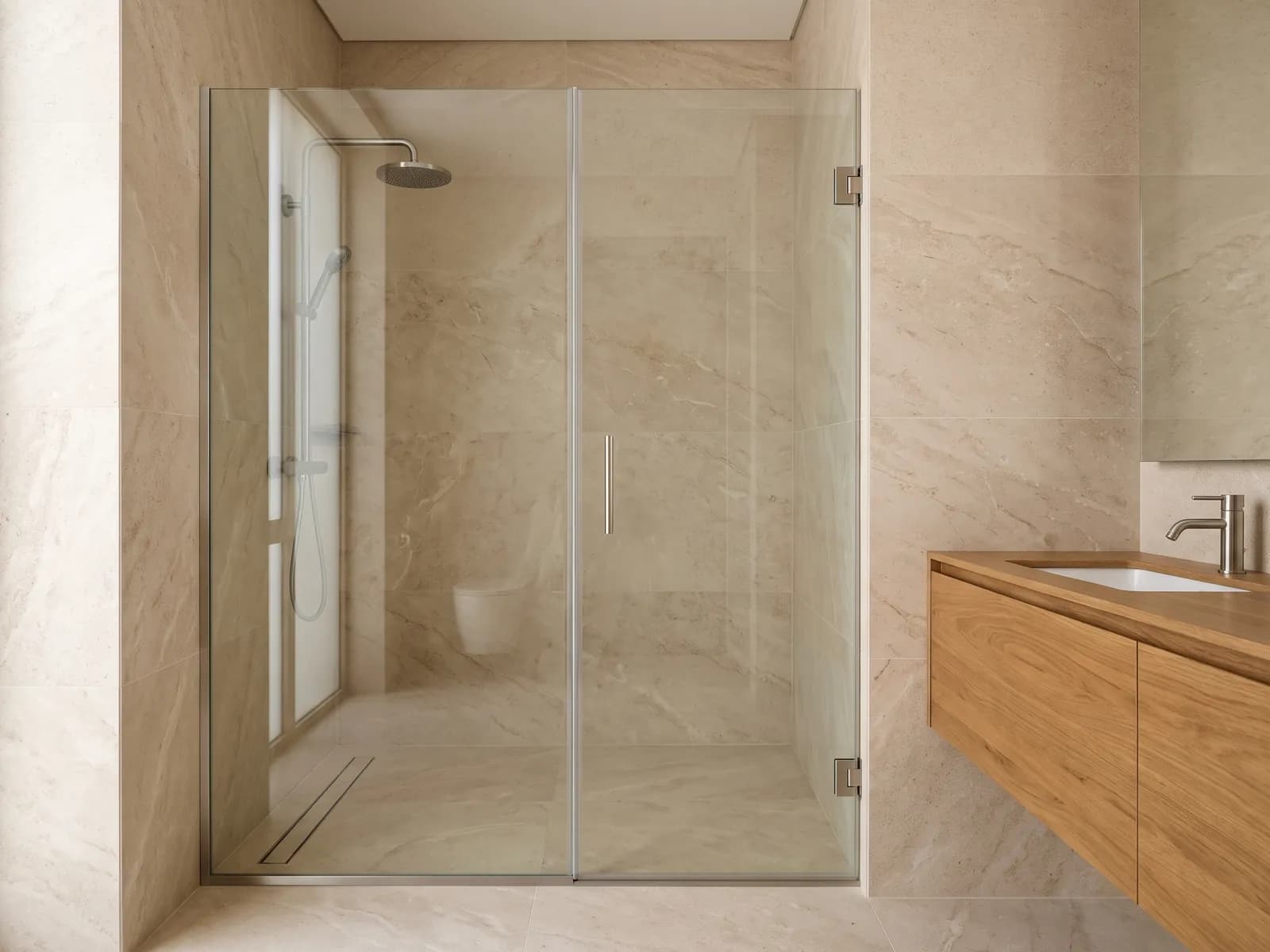
LED Mirrors
ALFA STAR for Glass makes custom LED mirrors to measure in its Riyadh factory, and installation is also available. Mirrors with moisture-resistant backing, optionally with integrated LED lighting and anti-fog.
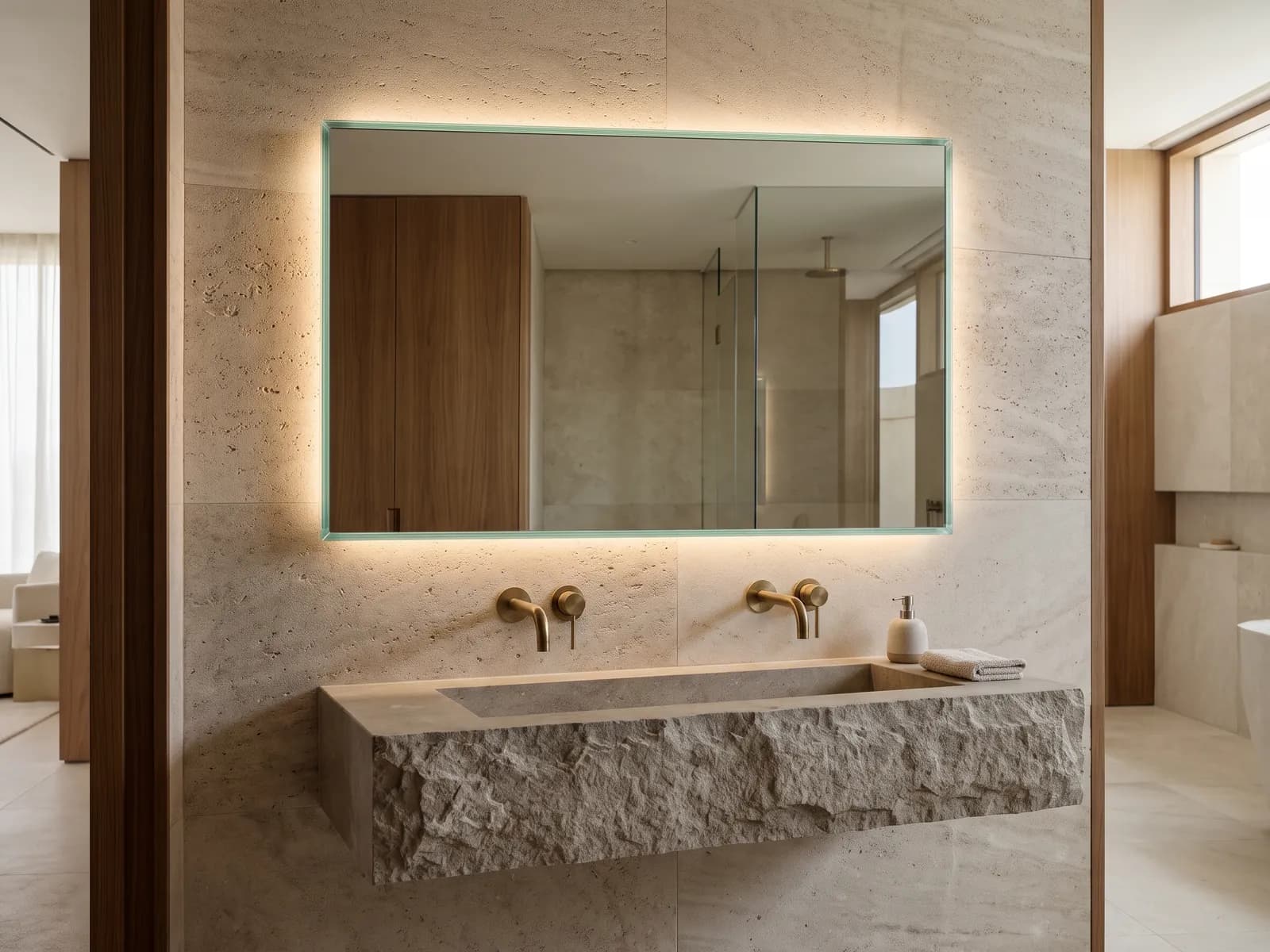
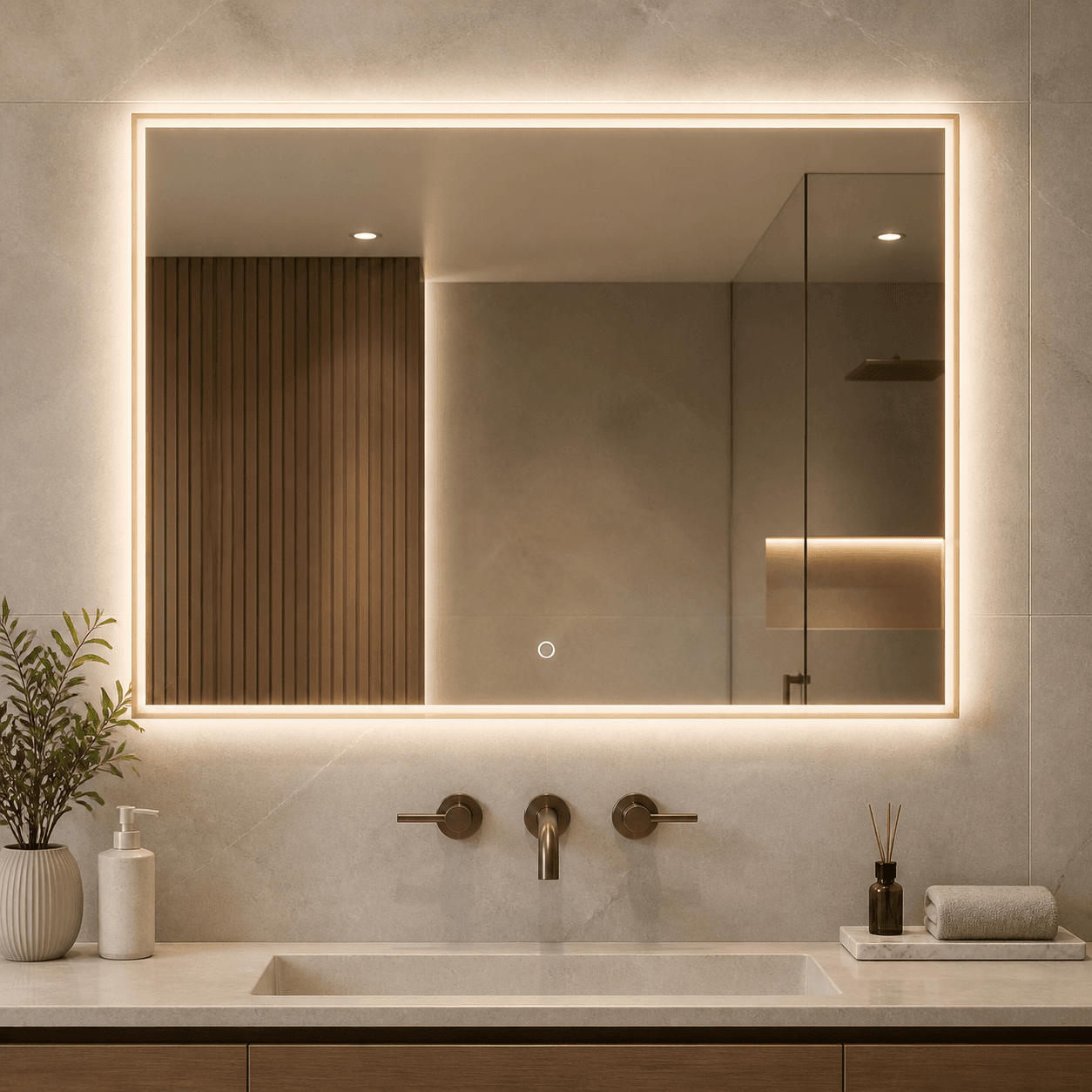
An LED mirror is an ordinary mirror with integrated lighting: an LED strip behind frosted zones in the mirror face, or behind its edges to give indirect light. The switch is a touch pad on the mirror itself, with no wall switch.
The practical difference from a fitting mounted above the mirror is that light arrives from the plane of the face, reducing shadows while shaving or applying make-up.
Options
| Option | What it does |
|---|---|
| Touch switch | On and off from the mirror face |
| Dimming | Adjusts light intensity |
| Demister | A heating pad behind the panel prevents condensation |
| Switchable colour temperature | Warm or cool white by use |
What to prepare before installation
- A power feed behind the mirror position. This is settled with the electrician before finishes; adding it after tiling means breaking the wall.
- The touch switch position is fixed on the drawing, because it is part of the design and cannot be moved later.
- Height is measured against the users, not against the wall.
Moisture and ventilation
Everything that applies to an ordinary mirror applies here and more: the backing layer needs ventilation, and the electrical connections need to stay dry. A gap is left behind the panel and the edges are not sealed airtight.
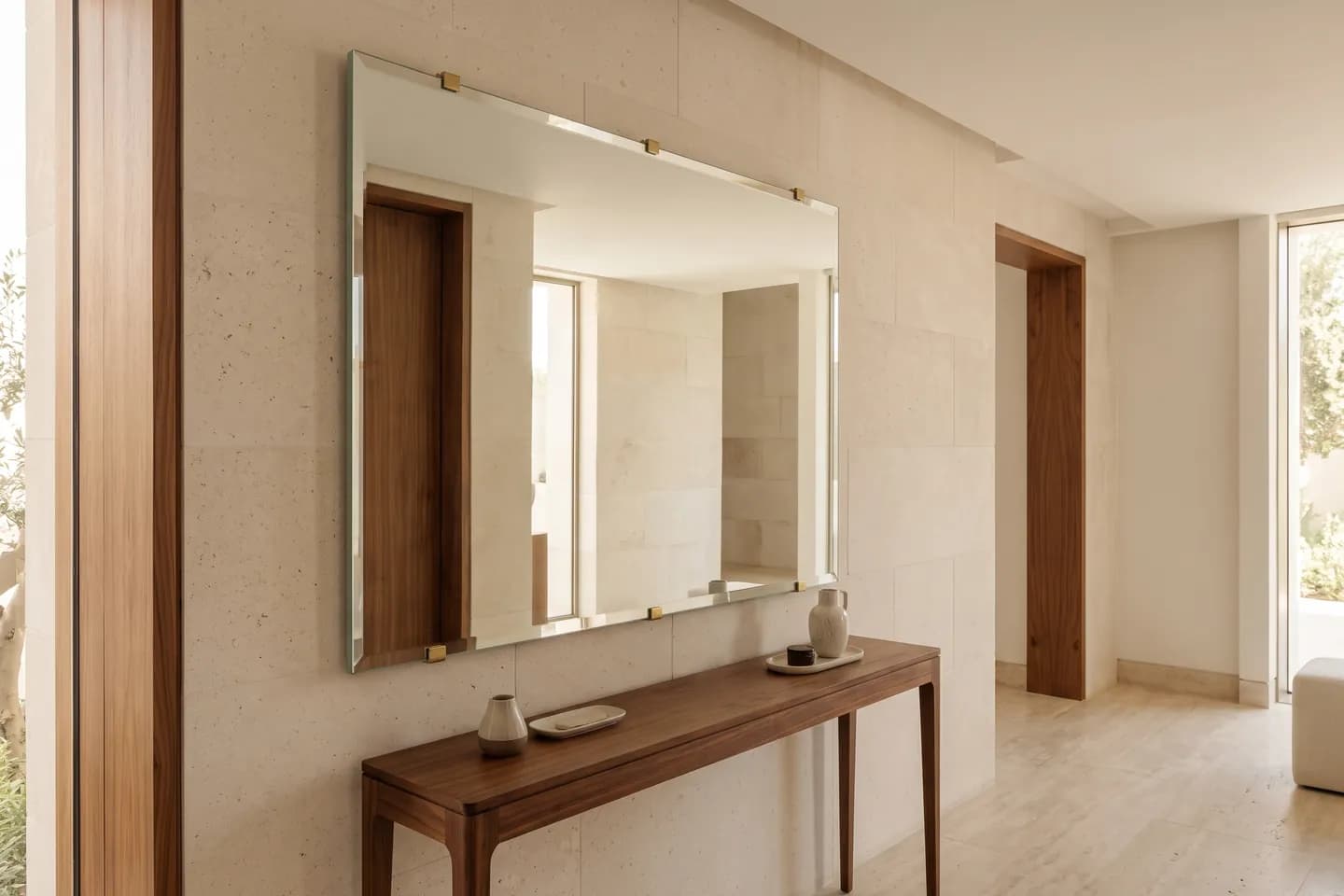
For plain and decorative mirrors and edge options see Plain & Decorative Mirrors.
Need both? Many bathrooms get an LED mirror and a glass shower enclosure at the same time. You can ask for both in one quotation request.
Key Advantages
- Moisture-resistant backing
- Integrated LED
- Polished edges
Technical Specifications
| Thickness | 4 - 6 mm |
|---|
Applications
- Bathrooms
- Hotel rooms
Production Line
Frequently Asked Questions
How thick should a bathroom mirror be?
4 mm is enough for panels under about one square metre. Use 5 or 6 mm for larger panels or where the mirror is drilled or has a frosted lighting pattern.
Does an LED mirror need a special electrician?
No. It needs a standard supply point behind the mirror connected to the supplied driver, and any licensed electrician can do it. The point must exist before the mirror is fixed.
Why do black spots appear at the edges of bathroom mirrors?
Because moisture is trapped behind the mirror and reaches the silver layer. The fix is a moisture-resistant backing, a ventilation gap behind the mirror, and edges that are not fully sealed.
What should be prepared before installing LED mirrors in a hotel?
A power feed behind the mirror position, the touch switch position on the drawing, and the demister decision, all before tiling and finishes.
What size should a bathroom mirror be?
As wide as the basin or slightly narrower, starting above the tap and reaching above the tallest user's head.
At what height should I fix a bathroom mirror?
Start the bottom edge about 10 to 25 cm above the tap and keep the centre of the mirror close to eye level, then adjust for the heights in your household.
Related Guides
Hotel Bathroom Glass and Mirrors: Specifying Shower Enclosures, Mirrors and LED Mirrors
Hotel bathroom specification: tempered glass for every shower enclosure with polished edges and matched holes, mirrors with moisture-resistant backing and a ventilation gap, LED mirror power before finishes, a mock-up room before production, and batch matching in phased supply.
8 November 2026 · 5 min read
LED Mirror or Standard Mirror? A Selection Guide for Bathrooms and Dressing Rooms
An LED mirror adds frontal light and a demister; a standard mirror costs less and suits large walls. This guide explains when to choose each in Riyadh.
25 September 2026 · 6 min read
Request a Quote
Request a Quote