
Glass Facades
Insulated and tempered facade units, cut and processed to project dimensions.
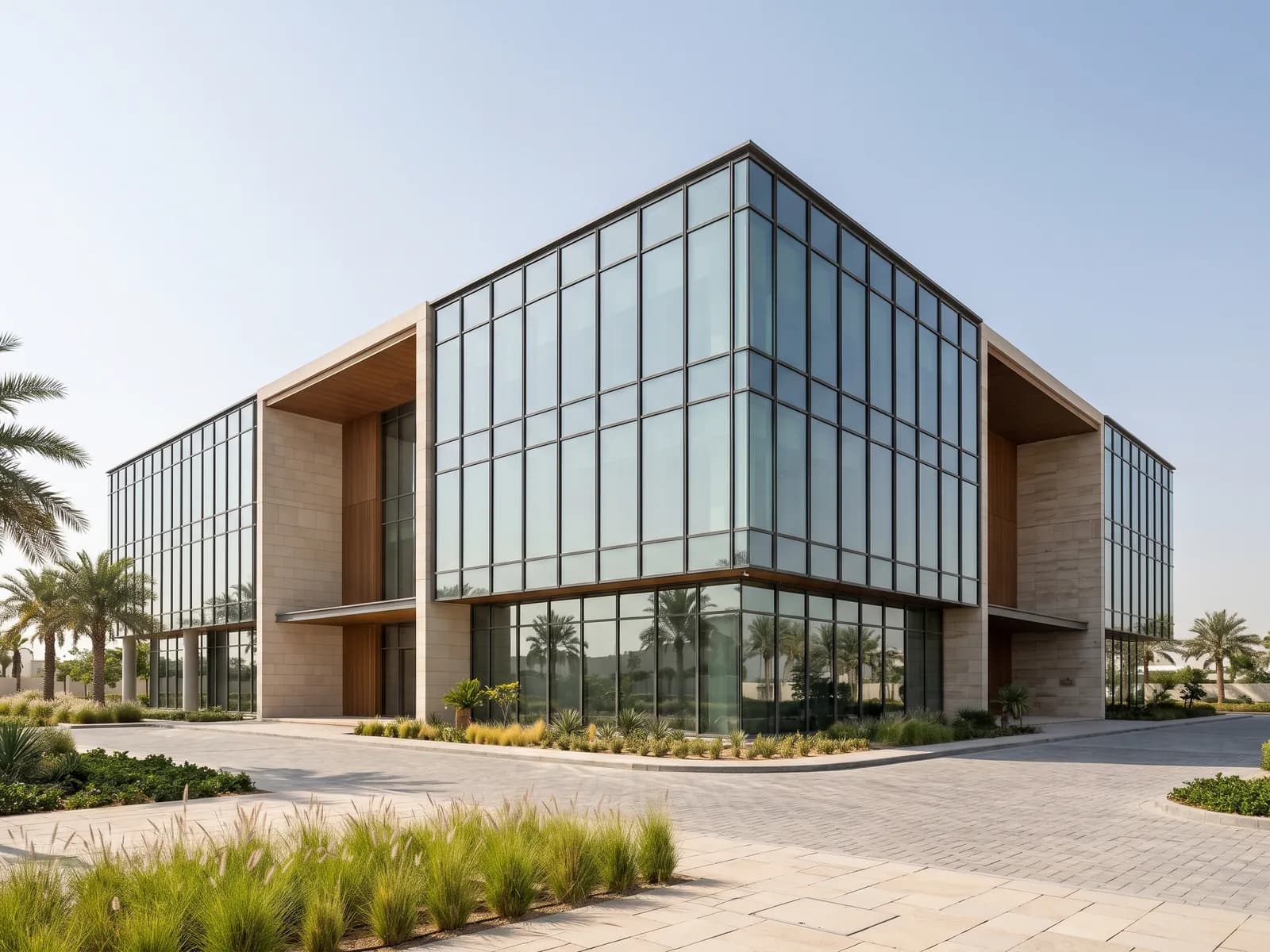
Glass facades combine two apparently opposing requirements: as much light as possible and as little heat as possible. In Riyadh's climate this is resolved with the coating and the cavity, not by darkening the glass.
What the specification must state
| Item | Why |
|---|---|
| Unit build-up | Pane thicknesses and cavity width |
| Coating type and surface number | The wrong orientation inverts thermal performance |
| Safety type | Tempered or laminated according to position |
| Spacer type | A warm-edge spacer reduces edge condensation |
| Climatic load | Necessary on large panels |
Dark glass is not the answer
Darkening the glass reduces visible light more than it reduces heat, which increases the need for artificial lighting. A selective coating does the opposite: it lets light through and rejects infrared.
Practical notes
- Large panel sizes need a planned access route inside the building.
- Structural tolerances are measured on site; nominally identical openings differ in practice.
- Final dimensions are fixed before tempering.
We produce facade units to project dimensions with cutting, edging, tempering and insulated assembly under one roof.
Key Advantages
- Project-specific sizes
- Insulated and tempered
Applications
- Office towers
- Shopping centres
Production Line
Insulated Glass (IGU)
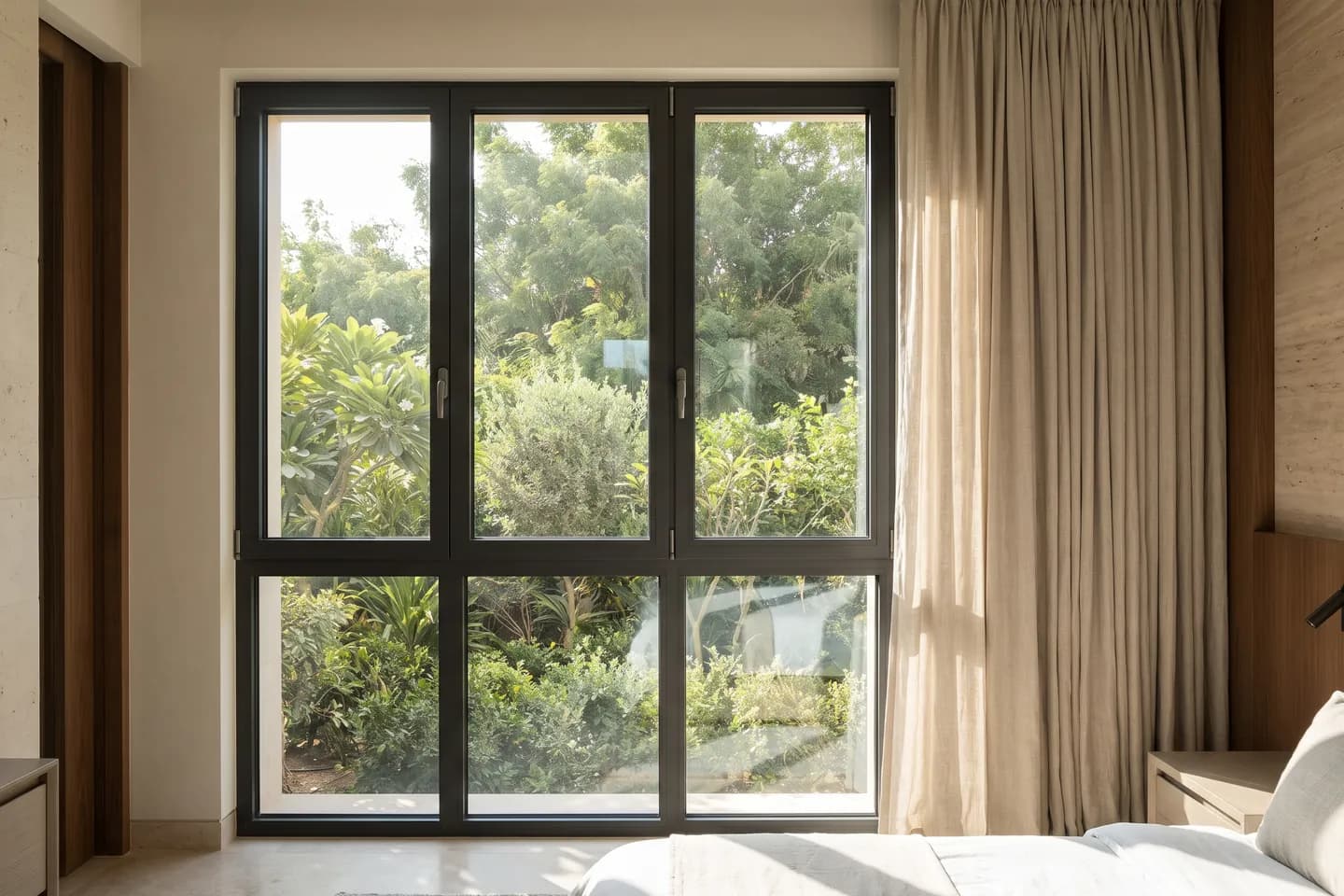
An insulated glass unit (IGU) combines panes around a sealed cavity. For windows and façades in Riyadh, it forms part of a specification that balances daylight, solar heat gain and heat transfer. The words “double glazing” alone do not describe the performance of the finished window.
Glass Tempering
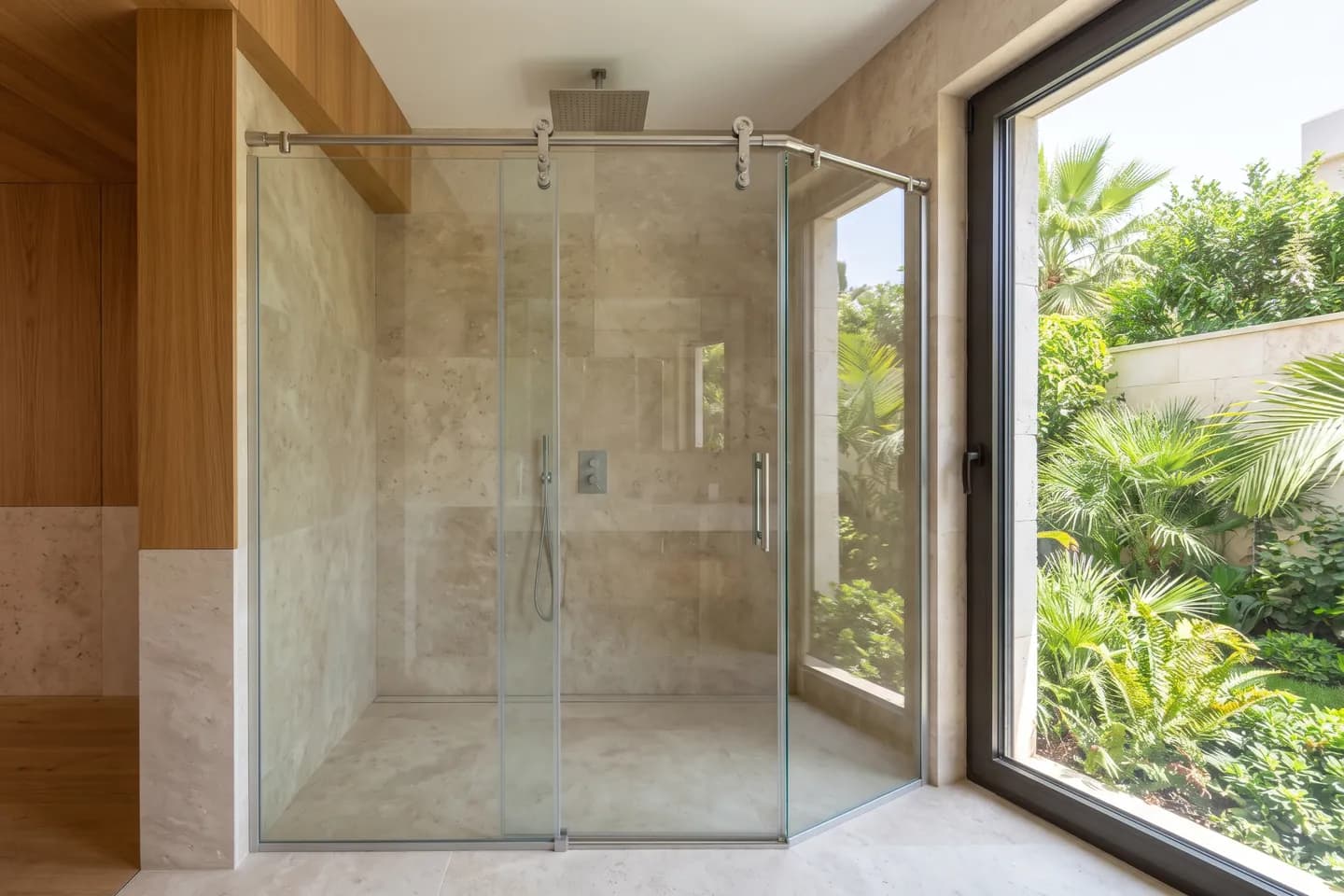
Tempered glass is heat-treated glass used where greater resistance and a safety breakage pattern are needed. For a Riyadh villa bathroom, shop door or office partition, the right specification includes the complete panel, its fittings and its supports—not thickness alone.
Frequently Asked Questions
Does reflective glass stop people seeing in at night?
No. When a room is lit at night, people outside can see in clearly; reflective glass gives privacy during the day only.
Do all facades of a building need the same glass?
Not always; west facades and roofs receive more radiation and may need a build-up with a lower solar heat gain coefficient.
Is there glass you can only see through from one side?
No. All glass passes light in both directions; what looks like one-way vision is the effect of the light difference between the two sides.
Related Guides
Does Reflective Glass Give Privacy at Night? Villa Privacy Options: Reflective, Sandblasted and Smart Glass
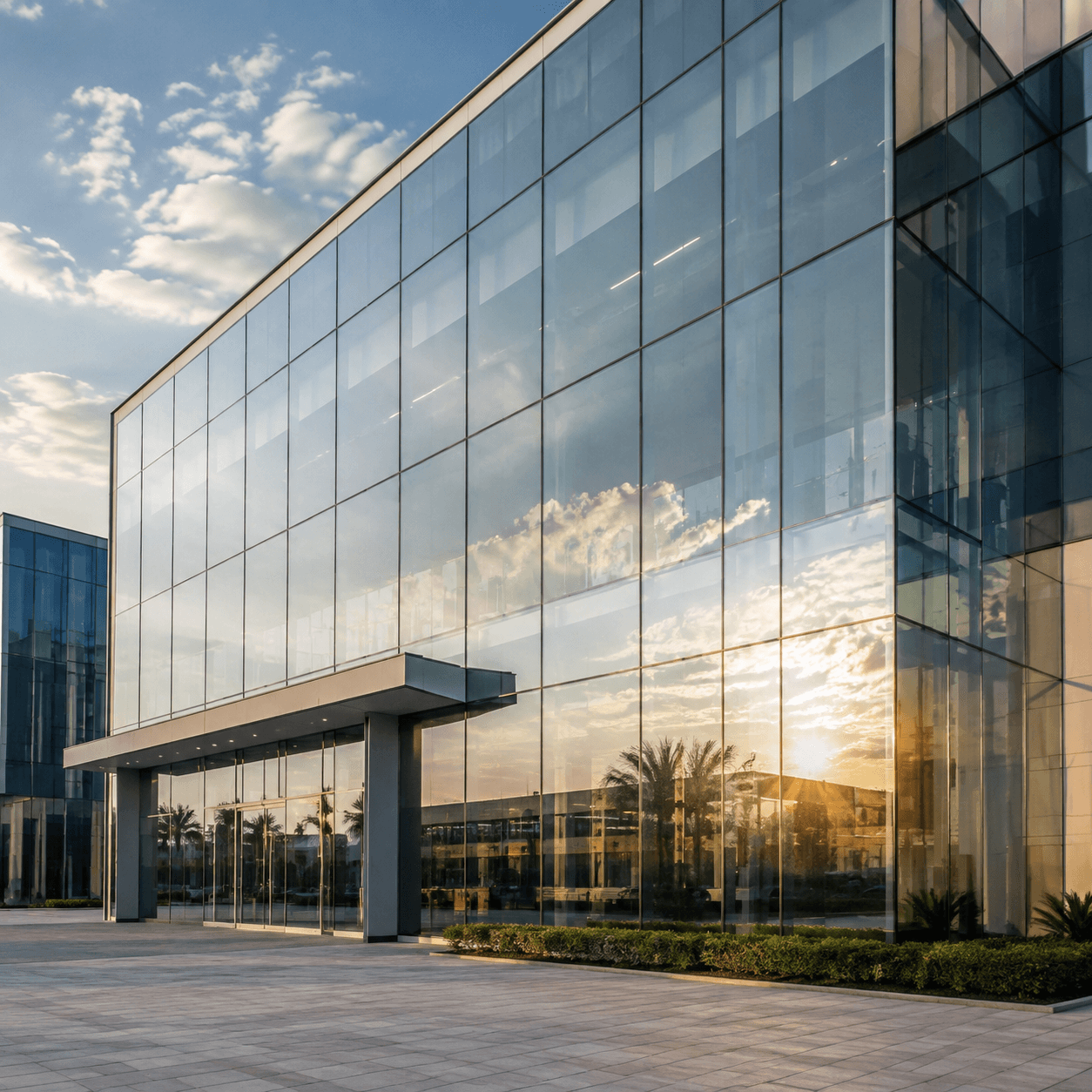
Reflective glass gives privacy only by day, while the outside is brighter than the inside; at night people outside can see into a lit room. Lasting privacy comes from sandblasted or smart glass or curtains, while reflective glass is excellent for facades and solar heat control.
15 November 2026 · 5 min read
Choosing Glass for Riyadh's Climate: Solar Heat Gain or U-value?
In Riyadh the most important number is the solar heat gain coefficient (SHGC), because the largest load is direct radiation. Double glazing with selective Low-E cuts heat gain while keeping daylight, and the build-up varies by application and facade orientation.
5 September 2026 · 5 min read
Request a Quote
Request a Quote