
Where Is Safety Glass Required? Tempered or Laminated in Each Location
September 5, 2026 · 5 min read
Safety glass is required in doors and adjacent panels, balustrades, overhead glazing, shower enclosures and large panels near the floor. Tempered glass shatters and falls while laminated stays in place, so laminated is required where glass could fall on people.
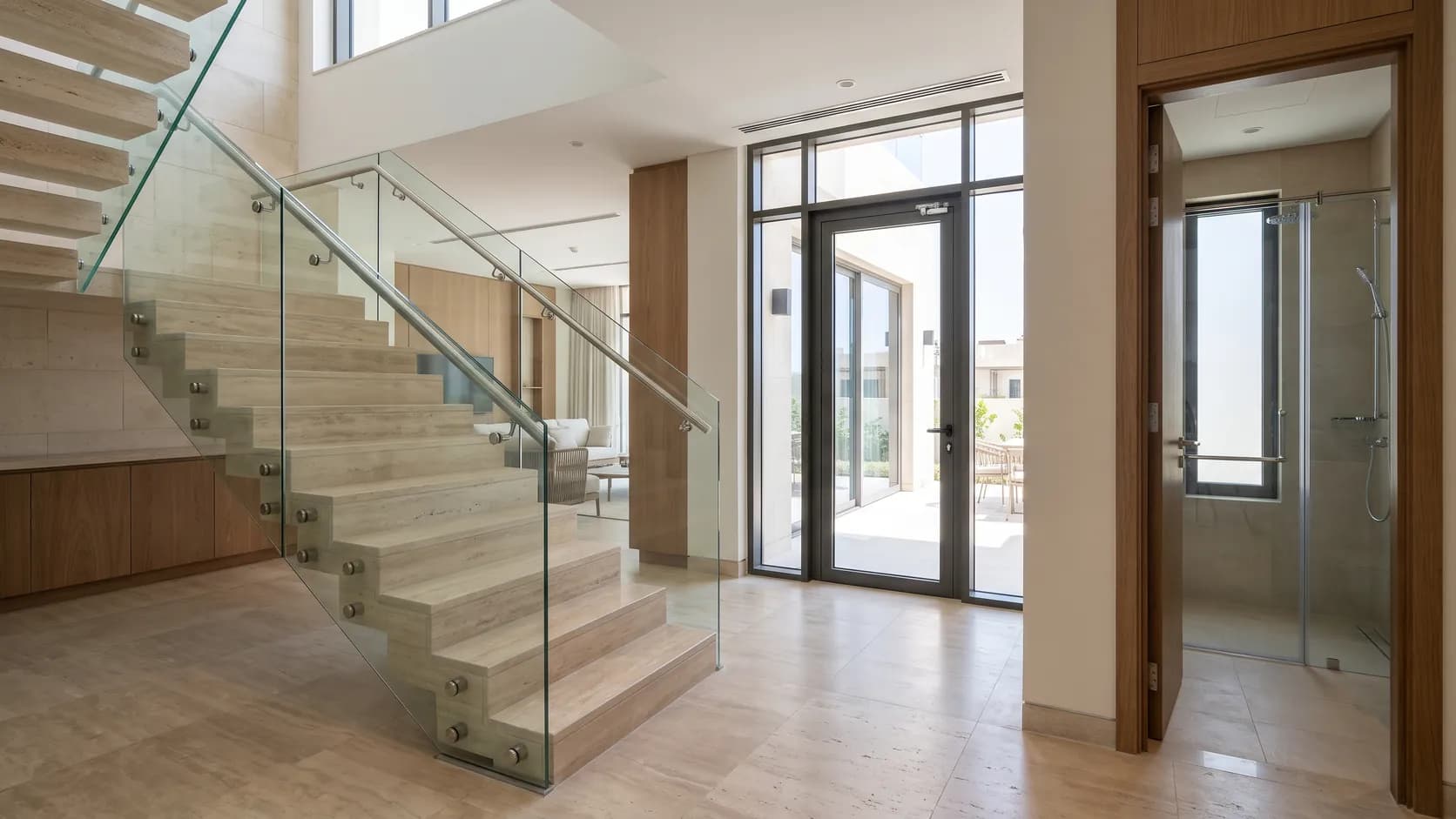
AI-generated illustration, not a photograph of a completed project.
Safety glass is required wherever a person can walk into it, or where broken glass could fall onto people: doors and the panels beside them, balustrades and barriers, overhead glazing, wet areas such as shower enclosures, and large panels close to the floor. Where glass could fall from height, laminated glass, not tempered, is the correct answer.
Tempered and laminated are not interchangeable
Tempered and laminated glass are both safety glass, but they break in different ways. Tempered glass breaks into small blunt granules and the whole pane comes down. Laminated glass cracks, but the interlayer holds the fragments in place.
| Criterion | Tempered | Laminated |
|---|---|---|
| Break behaviour | Small granules, pane falls | Cracks, stays in place |
| Overhead | Not suitable alone | Suitable |
| Balustrades | Depends on fixing system | The safe default |
| Acoustic performance | Same as annealed | Better |
| Cutting after processing | Not possible | Possible before assembly |
That is why the two are often combined: two tempered panes laminated together, joining the strength of tempered glass with the stay-in-place behaviour of laminated glass. The full comparison is in tempered vs laminated glass.
The five critical locations
There are five critical locations where safety glass is required, and each decides the right type:
- Glass doors and the panels next to them: direct impact risk; tempered glass is usual, as in tempered glass doors.
- Balustrades and barriers: strength is not enough here; the glass must not disappear when it breaks, so it is laminated. Details are in the glass balustrade guide.
- Overhead glazing: canopies, glass roofs and skylights, where the lower pane is always laminated.
- Wet areas: shower enclosures take repeated thermal and mechanical shock, and their glass is tempered.
- Large panels close to the floor: they can be mistaken for an opening and walked into, especially in halls and showrooms.
In Riyadh villas these locations recur in particular places: glass majlis doors opening onto the garden, internal stair balustrades and first-floor balconies, skylights over the hall or inner courtyard, and the shower enclosure in every bathroom. Offices and shops add full-height glass partitions and display fronts. The practical rule is simple: ask what happens if this panel breaks, and who stands beside it or beneath it, then choose the type on that basis.
Reference standards and the building code
Tempered glass is produced to EN 12150 or ASTM C1048, laminated glass to EN 14449 or ASTM C1172. These standards define break behaviour and test methods. A project specification should name a standard rather than say "safety glass".
In Saudi Arabia, the General Building Code (SBC 201) deals with safety glazing locations, and the reference is the officially adopted edition. On site, the engineer checks the tempered stamp etched in a corner of each panel, because ordinary glass is not stamped.
The question that gets forgotten
The question that always gets forgotten: are the final dimensions fixed? Tempered glass cannot be cut or drilled after tempering. Every hole, notch and cut-out has to be on the drawing before the panel enters the furnace, and any change afterwards means a new panel.
At our factory in Riyadh we cut, edge and drill glass before tempering and laminate it to project dimensions, with a team that brings 27 years of glass industry experience.
Frequently asked questions
Where is safety glass required?
In glass doors and the panels beside them, balustrades, overhead glazing, shower enclosures and large panels close to the floor.
Are tempered and laminated glass interchangeable?
No. Tempered glass shatters and falls when broken, while laminated glass stays in place, so laminated glass is required for balustrades and overhead glazing.
How can I confirm that glass is safety glass?
Name the standard in the specification, such as EN 12150 for tempered and EN 14449 for laminated glass, and check the tempered stamp in a corner of the panel.
Can tempered glass be cut after tempering?
No; every cut and hole is made before tempering, while laminated glass is cut as panes before assembly.
Send your glass schedule or drawing through the quote request form and we will identify the right type for each location with you.
Share this guide
Related Products
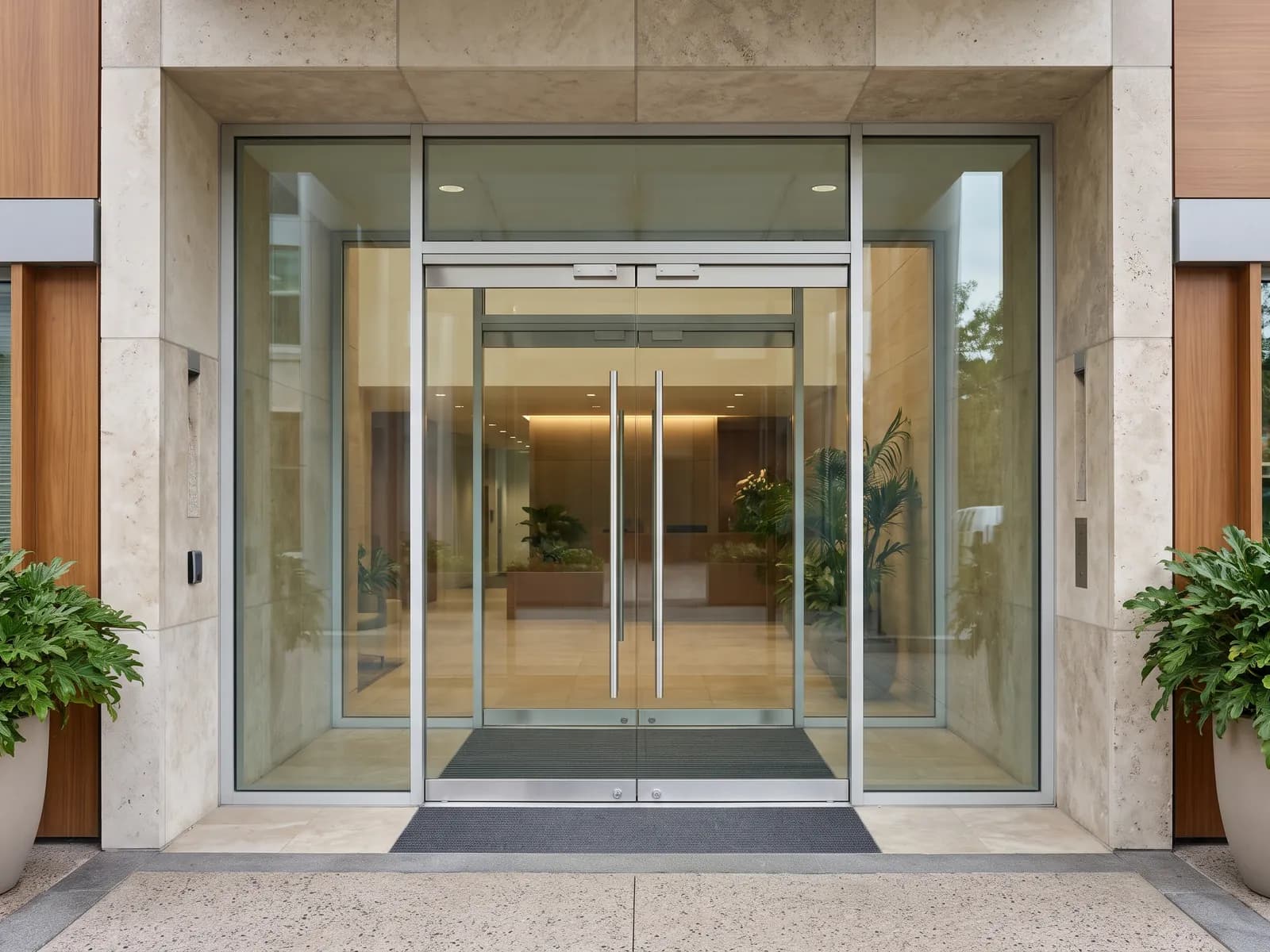
Tempered Glass Doors
10 or 12 mm tempered glass doors for office partitions, and glass for aluminium-framed doors, drilled and edged at our Riyadh factory before tempering, with installation available.
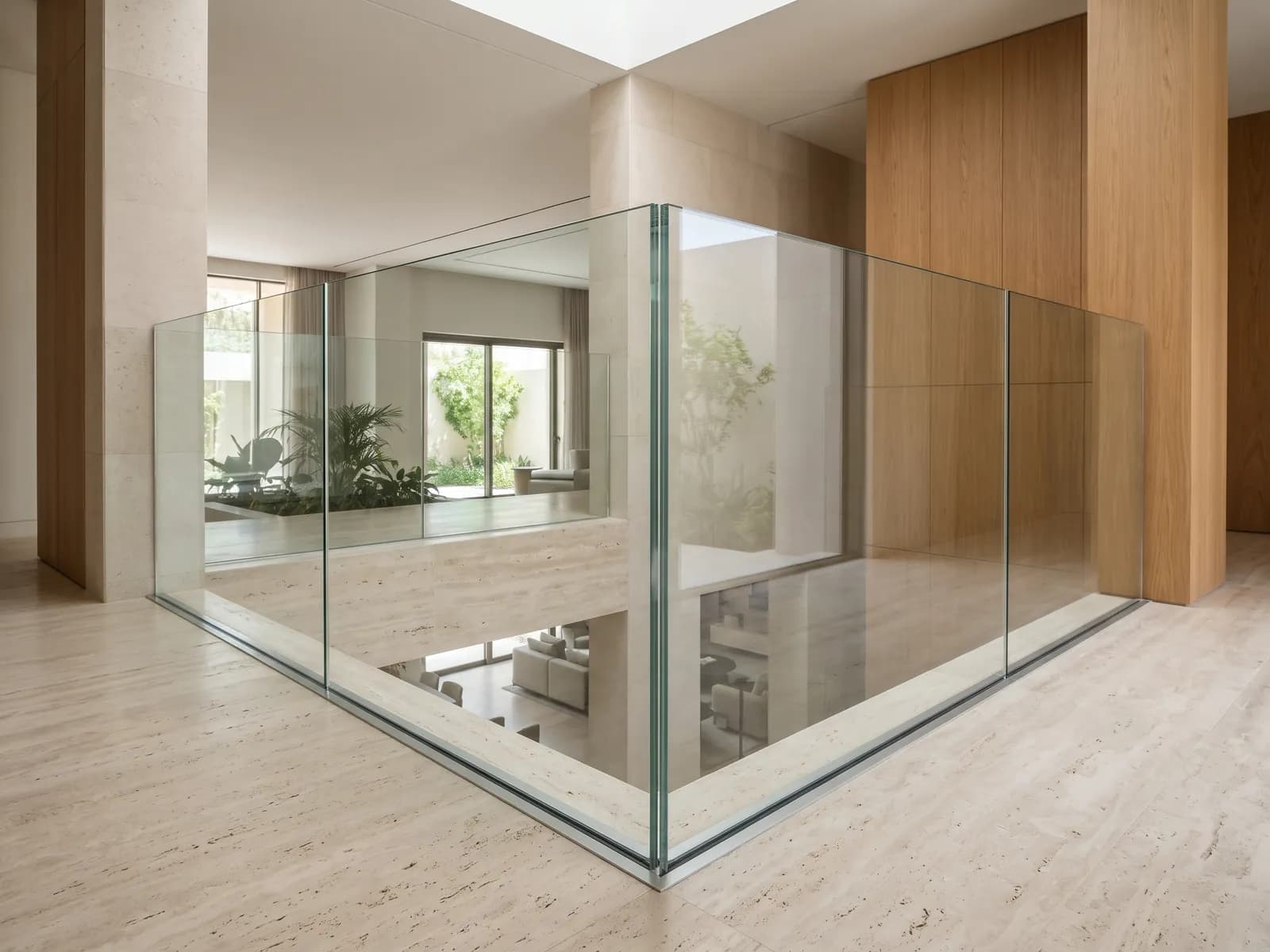
Laminated Glass
Two glass panes bonded by a PVB interlayer; on breakage the fragments stay bonded to the layer.
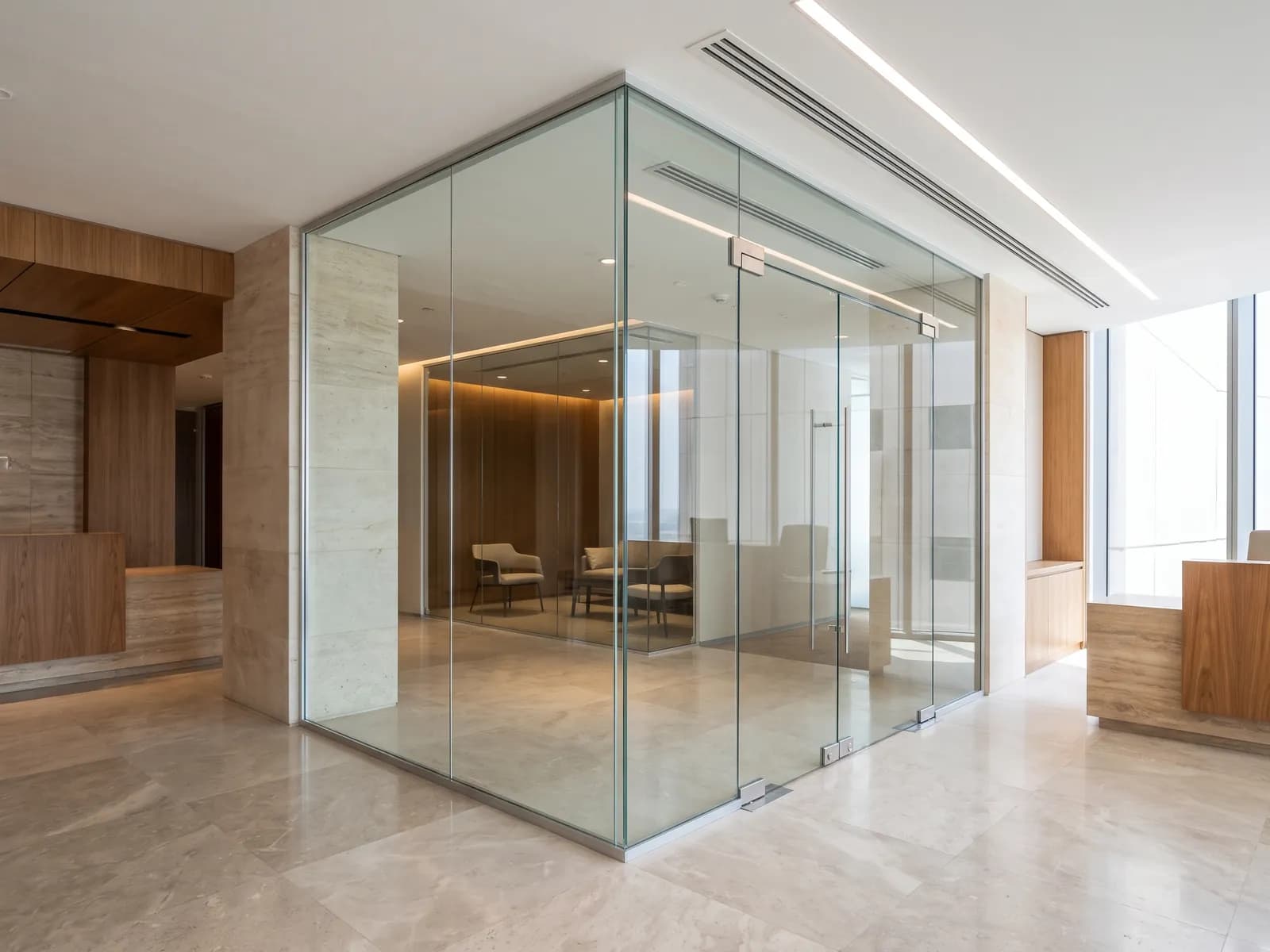
Tempered Glass
Heat treated glass that resists impact and breaks into small blunt granules, making it the standard choice wherever safety matters.