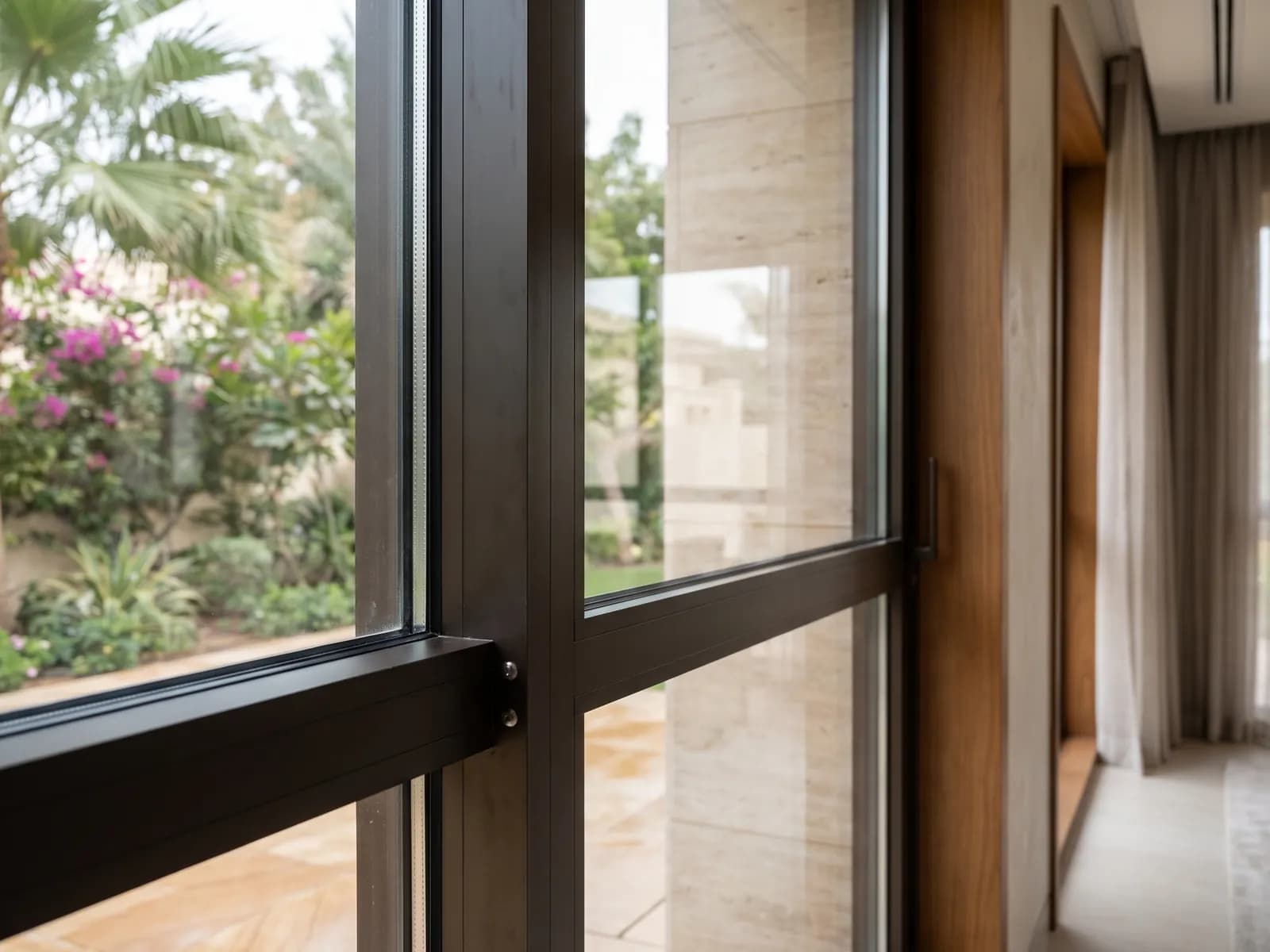
Benefits of Thermal Insulating Glass for Riyadh Homes
September 17, 2026 · 5 min read
Explore how insulating glass can improve comfort at home, manage solar heat and support efficient cooling, with practical questions to ask before ordering.
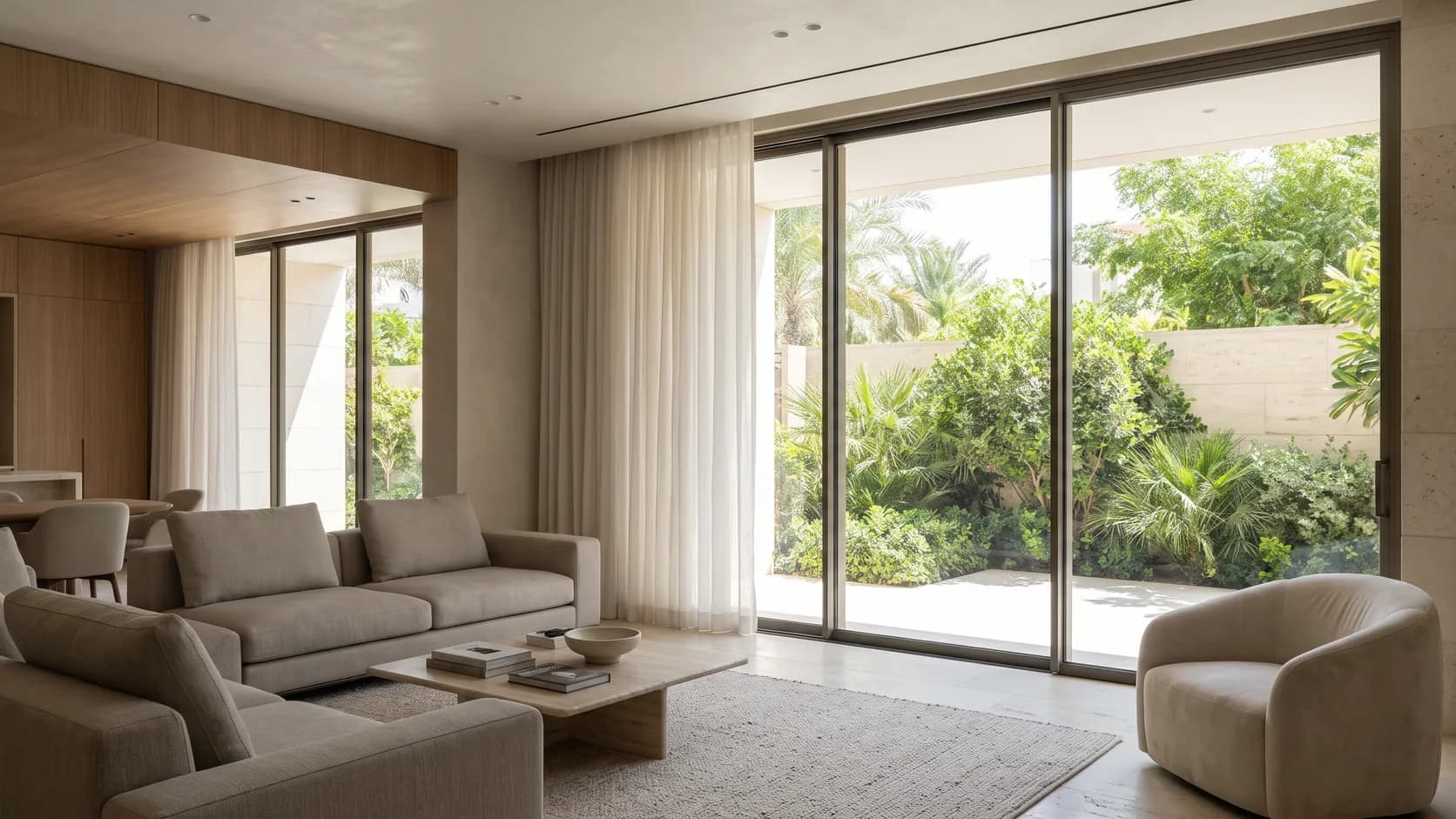
AI-generated illustration, not a photograph of a completed project.
High-performance insulating glass can make rooms more comfortable by limiting heat transfer through windows. For homes in Riyadh, solar control also matters: a suitable Low-E double-glazed unit can reduce incoming solar heat while admitting daylight. The result depends on the glazing specification, frame, seals, shading and installation—not the glass name alone.
What changes inside the home?
More comfortable seating near windows
A living room should be usable close to its windows, not only beside an air-conditioning outlet. Selecting glazing for both insulation and solar control can improve comfort in these areas. When planning a replacement, identify the room, time of day and window where discomfort occurs; this helps define the problem before choosing a product.
Less heat for the air conditioner to remove
Reducing heat entering through windows can reduce cooling demand. It does not translate directly into a fixed percentage reduction in electricity bills. A fair estimate needs the existing window specification, glazed area, orientation, shading, operating hours and air-conditioning efficiency. Ask for a project-specific comparison rather than a universal savings promise.
Daylight suited to the room
Thermal performance and brightness are different properties. Visible transmittance (VT) describes how much visible light passes through a window; solar heat gain coefficient (SHGC) describes solar heat gain. Compare both. For a family living room or home office, request a sample and review daylight, reflections and the need for shading together. [2]
How do the glazing options compare?
This table explains selection priorities, not guaranteed performance values. Compare supplier reports for the actual assemblies under the same rating method.
| Option | What it offers | What to check |
|---|---|---|
| Single clear pane | Daylight and a basic enclosure | Thermal performance before retaining it in a conditioned room |
| Clear double glazing | A sealed insulating cavity | U-value and SHGC; two panes alone do not specify solar control |
| Low-E double glazing with solar control | Insulation combined with reduced solar gain, depending on the coating | U-value, SHGC and VT for the proposed build-up |
| Triple glazing | Another cavity and additional design options | Whether the benefit justifies weight, frame compatibility and cost |
For construction details, see how insulated glass units work.
Which numbers should a homeowner request?
Ask for U-value, SHGC and VT, with the test or calculation method identified. Lower U-value means less heat transfer; lower SHGC means less solar heat admitted. Higher VT means more daylight. These values describe different properties, so one cannot replace another. NFRC explains these rating categories for homeowners. [3]
Ask whether a U-value is for the glazing alone (often Ug) or the complete window (often Uw). Compare like with like and use consistent units, such as W/m²K. A glazing-only result does not describe the installed frame, edge details or air leakage. Do not treat a general reference to NFRC as certification of an ALFA STAR product.
For an exposed window in Riyadh, assess solar control alongside insulation and shading. A shaded bedroom and an exposed living room may need different specifications. See our Riyadh climate glass selection guide.
What should be checked before ordering?
- Identify the room, window orientation and existing shading.
- Provide approximate glazed dimensions and photographs for an initial discussion.
- Compare the proposed glazing and complete-window performance on the same basis.
- Confirm frame compatibility, seals, installation scope and safety-glass requirements.
- Request documented specifications and warranty terms for the chosen assembly.
The US Department of Energy describes glazing, coatings, gas fills, spacers and frames as parts of window energy performance. A Low-E label alone does not define the finished window. [1]
Frequently asked questions
Will insulating glass reduce my electricity bill?
It can help when window heat gains are a significant part of cooling demand. The amount depends on the home and its use. A product U-value is not a percentage saving on the household bill.
Is every double-glazed unit the same?
No. Coatings, cavity configuration, gas fill and edge construction can differ. Request the actual specification and performance report, rather than comparing only the number of panes. [1]
Should I choose the darkest glass?
Colour alone is not a performance rating. Compare SHGC and VT and review a sample in the intended setting. The aim is a comfortable room with suitable daylight.
Can I replace only the glass?
Have the existing frame assessed first. The proposed unit must be compatible with its dimensions, support and sealing system. Include installation and any frame work in the quotation so that alternatives are comparable.
Discuss the glazing for your home
Share your location in Riyadh, the room type, approximate window sizes, orientation and photos with ALFA STAR for Glass. These details support a focused discussion about the glazing specification and quotation scope. Explore insulated glass or request a quotation.
Image note: The cover is an AI-generated architectural illustration, not a photograph of a completed ALFA STAR project.
References
[1] US Department of Energy — Guide to Energy-Efficient Windows (technical background; 2010): https://www.energy.gov/sites/prod/files/guide_to_energy_efficient_windows.pdf
[2] US Department of Energy — Purchasing Energy-Efficient Residential Windows, Doors, and Skylights: https://www.energy.gov/cmei/femp/purchasing-energy-efficient-residential-windows-doors-and-skylights
[3] National Fenestration Rating Council — Window performance ratings: https://nfrc.org/