
Why Does Tempered Glass Break on Its Own? Causes, Prevention and How to Tell It Is Tempered
October 25, 2026 · 5 min read
Spontaneous tempered glass breakage usually comes from old edge damage or glass-to-metal contact, and sometimes from nickel sulphide inclusions. Sound edges, correct installation, heat soak testing and laminated glass for roofs and balustrades reduce the risk.
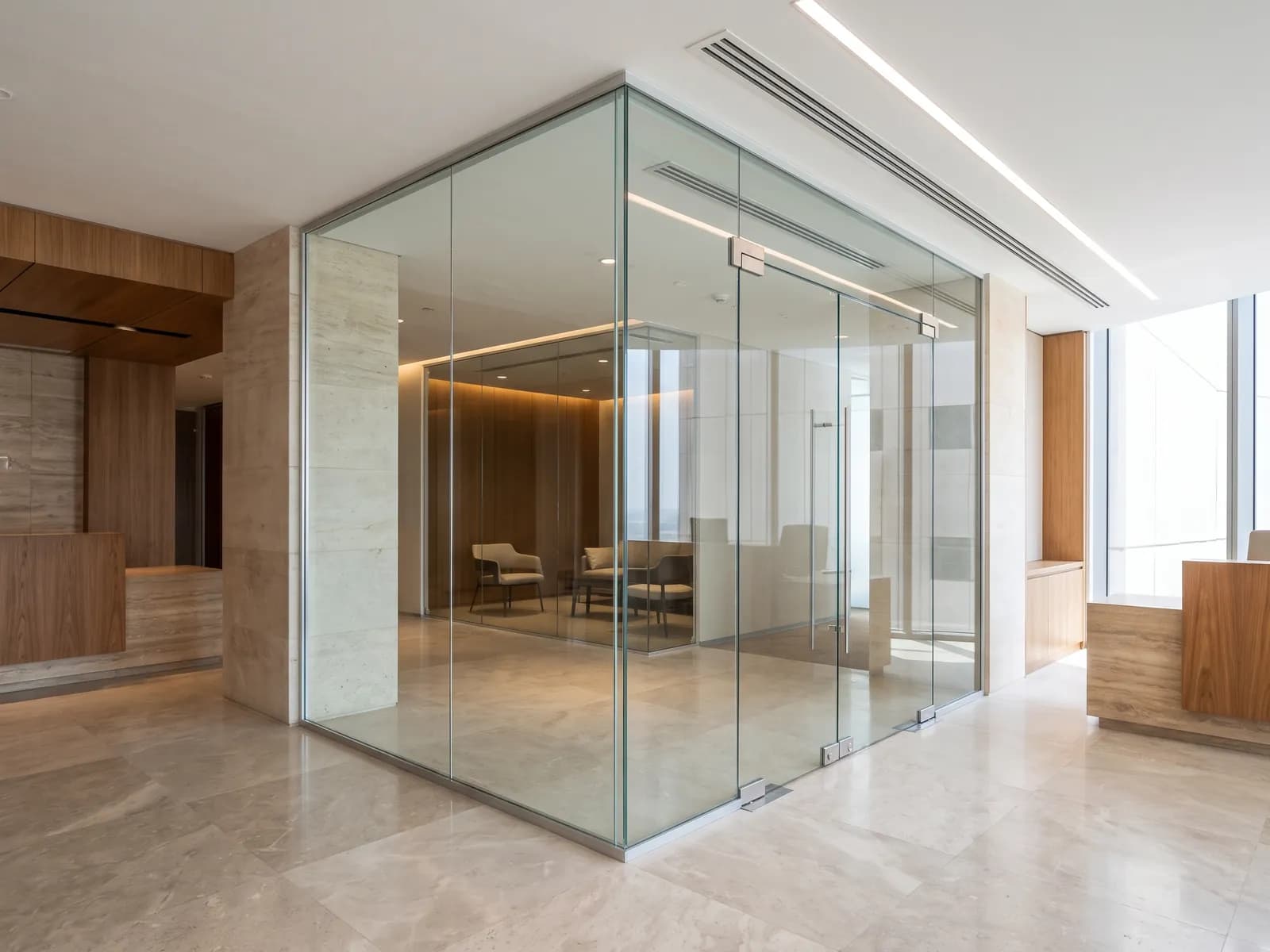
Tempered glass that breaks "by itself" is usually failing from old edge damage or glass-to-metal contact in the installation, and sometimes from nickel sulphide (NiS) inclusions inside the glass. Spontaneous breakage is rare, but when it happens the whole panel shatters into small pieces, so its causes should be reduced in production and installation, and laminated glass chosen where a panel must stay in place.
Why does tempered glass shatter all at once?
Tempered glass shatters all at once because tempering leaves its surfaces in compression and its core in tension, so once a crack reaches the core, the energy stored across the whole panel is released. The same property makes it several times stronger than ordinary glass and makes its fragments far less sharp than ordinary glass shards.
That is why a break can seem to have "no cause": a small chip may sit in the edge for months, then the crack completes with a temperature change, a shower door impact or building movement. Read more about tempered glass and how tempering is done in the factory.
What really causes spontaneous breakage?
There are four real causes of spontaneous breakage, and the most common come from edges and installation, not from the glass itself:
- Edge or surface damage: a small chip in the edge during transport or installation, or a deep scratch. The edge is the weakest point of a tempered panel.
- Glass touching metal or concrete: a screw touching the glass, a hinge tightened without a gasket, or a frame with no clearance around the panel.
- Installation stress and building movement: a panel forced into an out-of-square opening, or a structure that moves and presses on the glass.
- Nickel sulphide (NiS) inclusions: a microscopic particle that can exist in raw glass. After tempering it slowly changes volume and can break the panel, sometimes years later. It is rare, but well documented worldwide.
How can you tell what caused a break?
You can tell what caused a break from its origin: every tempered glass break starts at one point, with the fracture lines spreading out from it. This table summarises what to look for:
| Cause | Where the break starts | When it usually happens | Prevention |
|---|---|---|---|
| Edge damage | At an edge or near a hole | Days or months after installation | Polished edges and careful handling |
| Contact with metal | At a hinge, screw or frame | After an impact or temperature change | Gaskets and clearance around the panel |
| Installation stress | At a pressure point in the frame | With building movement or heat | Square opening and correct installation |
| Nickel sulphide | Inside the panel, with a "butterfly" origin | Can be years later | Heat soak testing; laminated glass overhead |
If the break starts in the middle of the panel with a shape like two butterfly wings around the origin, nickel sulphide is the likely cause. If it starts at an edge or a hinge, the cause is usually handling or installation.
How do you reduce the risk?
You reduce the risk of spontaneous breakage with three things: sound edges, an installation that does not press on the glass, and the right glass type for the location. In shower enclosures, make sure hinges are fitted with gaskets and that the door cannot strike a wall or another panel when it opens.
A heat soak test to EN 14179 exposes tempered panels to high heat for hours, so that most panels with nickel sulphide break before installation. It does not remove the risk completely, but it reduces it substantially, and it is commonly specified for facades and overhead glass. Ask your supplier directly whether the quote includes it, and ask for proof.
For roofs, skylights and balustrades over a drop, do not rely on single tempered glass: choose laminated glass, usually made from tempered panes, because the PVB interlayer holds the fragments and keeps the panel in place if it breaks. See tempered vs laminated glass and the glass balustrade guide.
How do you know glass is really tempered?
You know glass is tempered from the stamp etched in a corner of each panel, which usually names the manufacturer and a standard such as EN 12150. Ordinary glass is not stamped, and a stamp cannot be added after installation.
There is a second sign: look at the panel through polarised sunglasses, and tempered glass shows regular dark spots or stripes left by quenching in the furnace. This is a helpful sign, not a replacement for the stamp. At our factory in Riyadh we cut, edge and drill glass before tempering, with a team that brings 27 years of glass industry experience.
Frequently asked questions
Why did my shower glass break on its own?
Usually because of old damage at an edge or hinge, contact with metal, or the door being knocked. Nickel sulphide inclusions inside the glass are a rarer cause.
Is spontaneous breakage of tempered glass dangerous?
Tempered fragments are small and far less sharp than ordinary glass, but falling from height they are still a hazard, which is why laminated glass is used for roofs and balustrades.
What is a heat soak test?
A test that holds tempered panels at high temperature for hours to EN 14179, so that most panels containing nickel sulphide break before installation. Ask your supplier whether the quote includes it.
How can I tell if glass is tempered?
From the stamp in a corner of the panel; polarised sunglasses can also show the tempering pattern.
For shower, balustrade or facade glass to the right specification, send your drawing through the quote request form.
Share this guide
Related Products
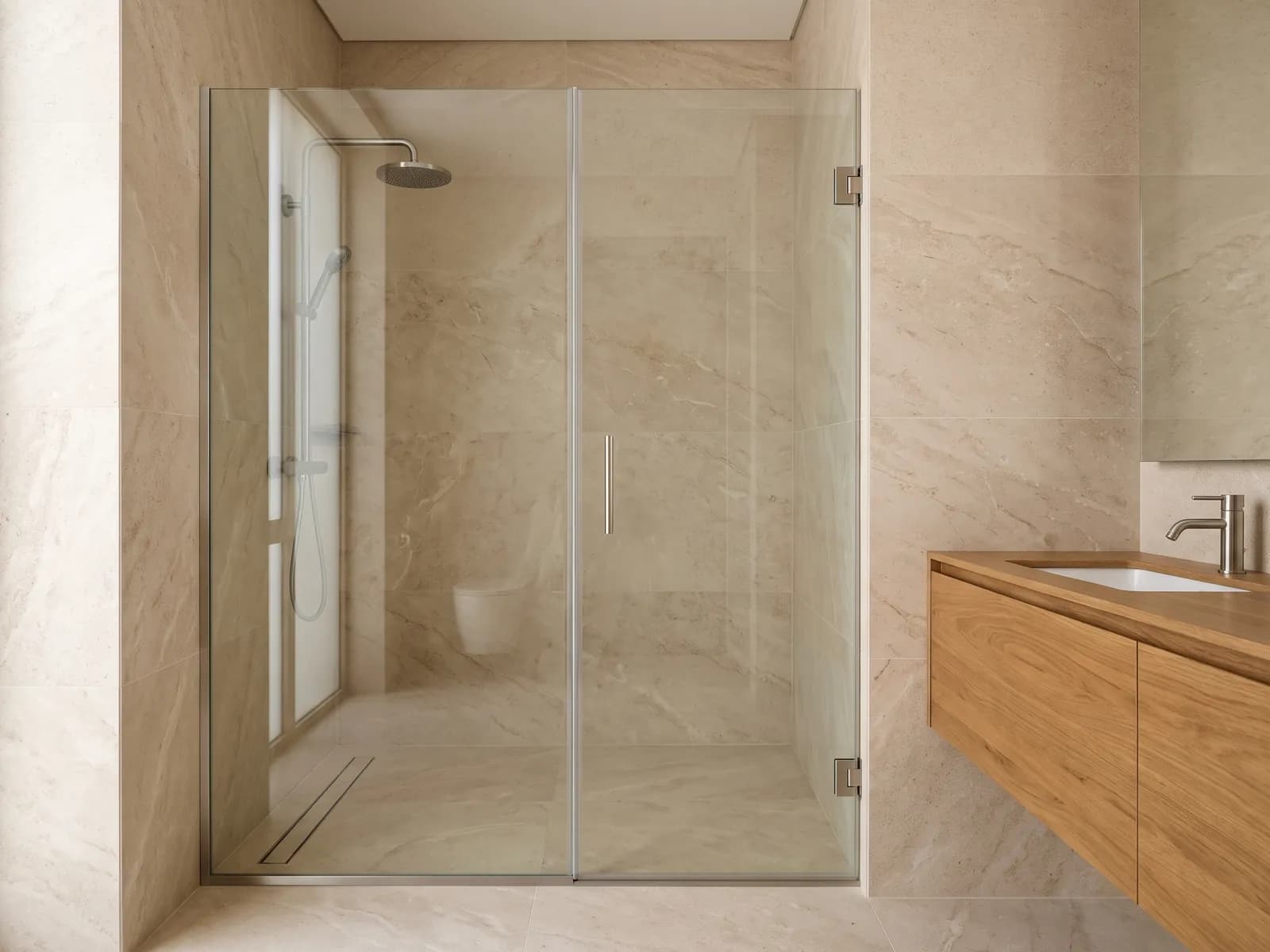
Shower Enclosures
ALFA STAR for Glass makes custom glass shower enclosures to measure in its Riyadh factory, and installation is also available. Tempered glass enclosures in 8 or 10 mm with corrosion-resistant hinges and fittings.
Tempered Glass
Heat treated glass that resists impact and breaks into small blunt granules, making it the standard choice wherever safety matters.
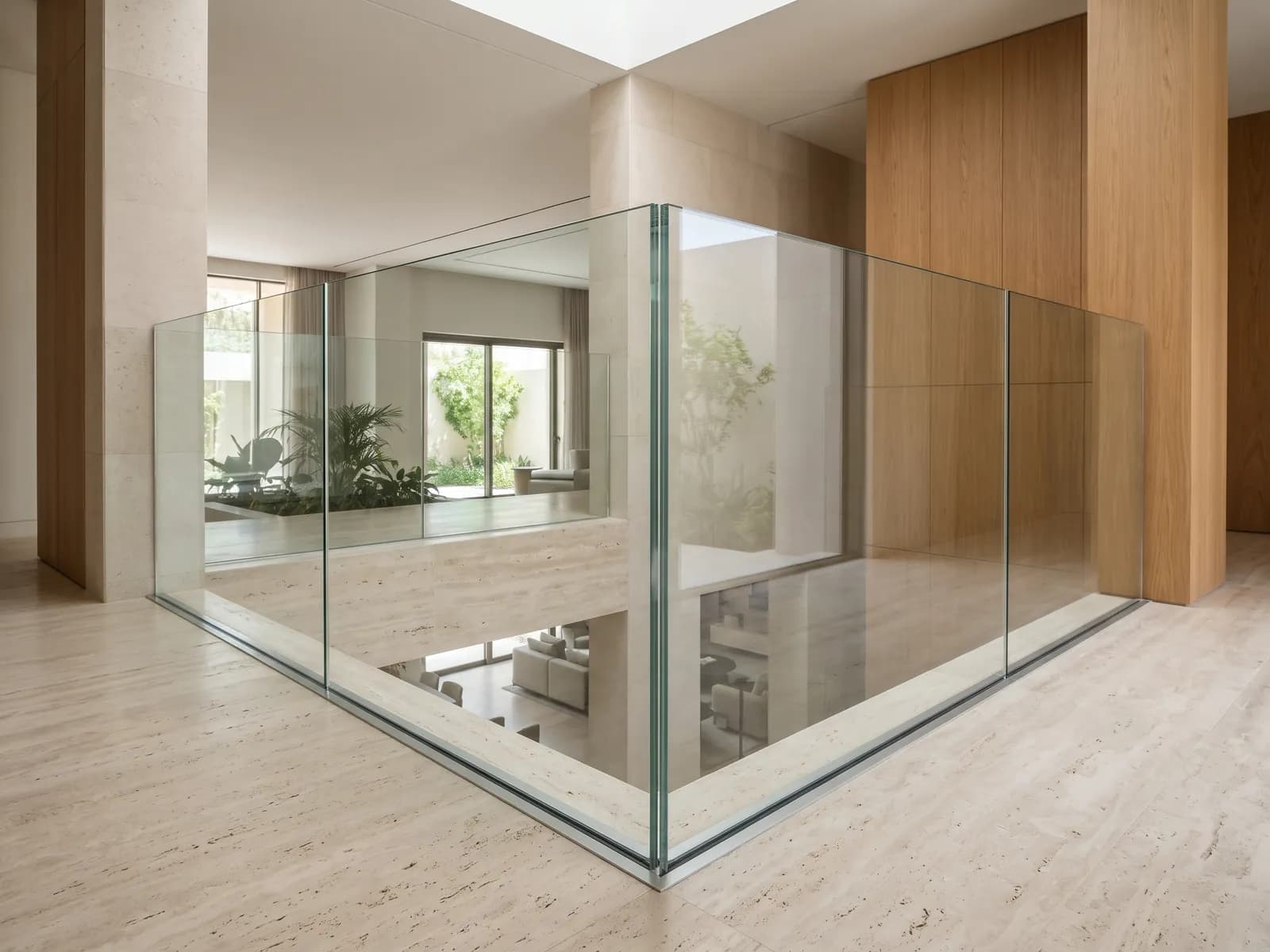
Laminated Glass
Two glass panes bonded by a PVB interlayer; on breakage the fragments stay bonded to the layer.