
Decorative Glass
Sandblasted or patterned glass for interior partitions and doors.
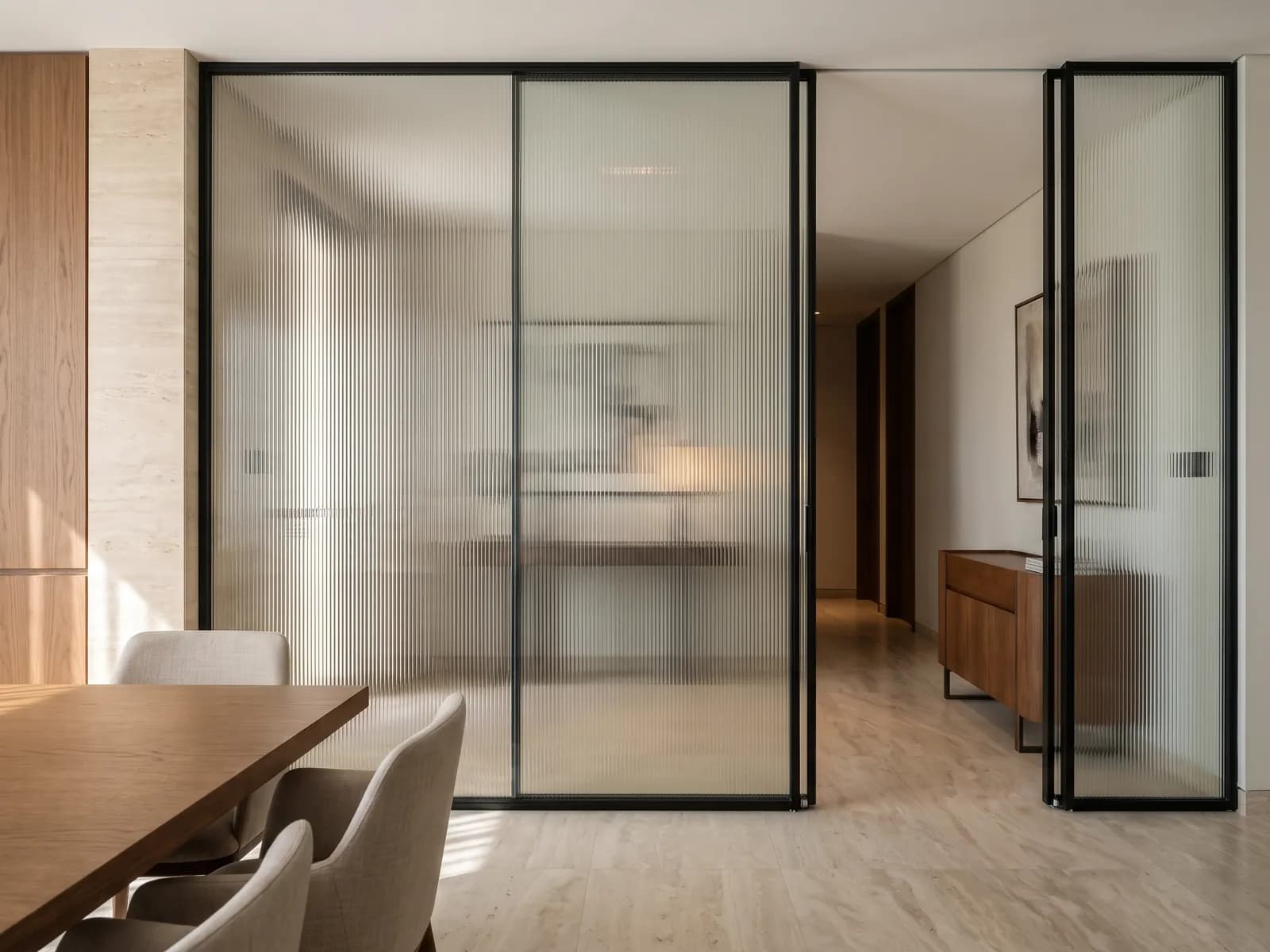
Decorative glass is not a separate type of glass but a treated surface: the sheet itself is ordinary or tempered flat glass, and what differs is what is done to its face. Three treatments cover most requests, and they are frequently confused with one another because the visual result is close.
| Treatment | How it is done | Texture | Transparency |
|---|---|---|---|
| Sandblasted | Pressurised sand on the surface | Fine and rough | Opaque, passes light |
| Frosted | Chemical surface treatment | Smooth, silky | Opaque, passes light |
| Designed / patterned | Stencil or drawn pattern | Varies by design | Partial |
Sandblasted glass
Fine sand is directed at the surface under high pressure, removing a microscopic layer and leaving a surface that scatters light. The result is an opacity that passes light without allowing sight through.
The whole sheet can be blasted, or parts of it through a stencil, so clear shapes appear within a matt background - or the reverse.
A practical point: a sandblasted surface holds fingerprints and grease more than smooth glass, because its microscopic roughness traps them. On doors and partitions that are touched often, a repellent coating is specified to make cleaning easier.
Frosted glass
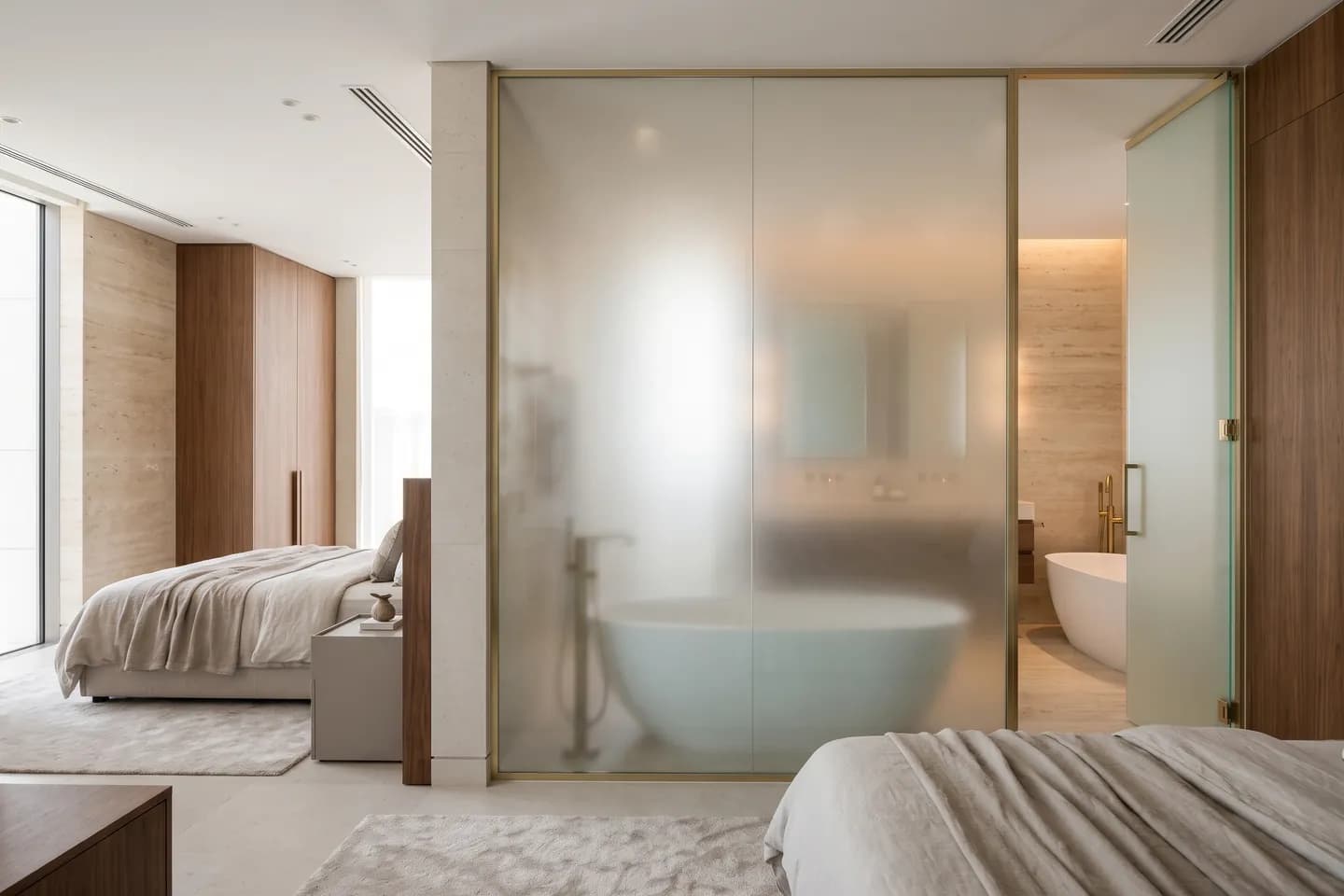
The surface is treated chemically rather than blasted, producing a softer, more uniform texture that traps far less dirt. The visual result is close to sandblasting, but the surface is silky rather than rough.
This is the usual choice for:
- Bathroom partitions and shower enclosures.
- Office doors needing privacy while keeping daylight.
- Surfaces touched daily.
Designed and patterned glass
A pattern or drawing applied to the surface by stencil or custom design: geometric lines, ornament, or a logo. Blasted and clear areas can be combined in the same sheet for contrast.
The design is reviewed at final size before production, because proportions shift as sheet dimensions change.
Safety
Surface treatment does not make a sheet safety glass. A decorative partition or door is tempered or laminated exactly as a clear one would be; blasting and frosting do not change breakage behaviour. For decorative mirrors see Mirrors.
Key Advantages
- Custom patterns
- Privacy with light transmission
Applications
- Office partitions
- Doors
Production Line
Frequently Asked Questions
Which is best for privacy: sandblasted, film or smart glass?
Sandblasting is permanent, film can be changed, and smart glass switches between opaque and clear but needs a planned power supply and turns opaque in a power cut.
What is the best glass for privacy day and night?
Sandblasted glass gives permanent privacy while letting light through, and smart glass gives it on demand at the press of a switch.
Is antique mirror suitable for everyday use?
Usually not; its patterns reflect the image only partly, so it is a decorative surface. Use silver mirror where people need a clear view.
Related Guides

Does Reflective Glass Give Privacy at Night? Villa Privacy Options: Reflective, Sandblasted and Smart Glass
Reflective glass gives privacy only by day, while the outside is brighter than the inside; at night people outside can see into a lit room. Lasting privacy comes from sandblasted or smart glass or curtains, while reflective glass is excellent for facades and solar heat control.
15 November 2026 · 5 min read
Office Glass Partitions in Riyadh: Tempered or Laminated? Acoustics, Privacy and Doors
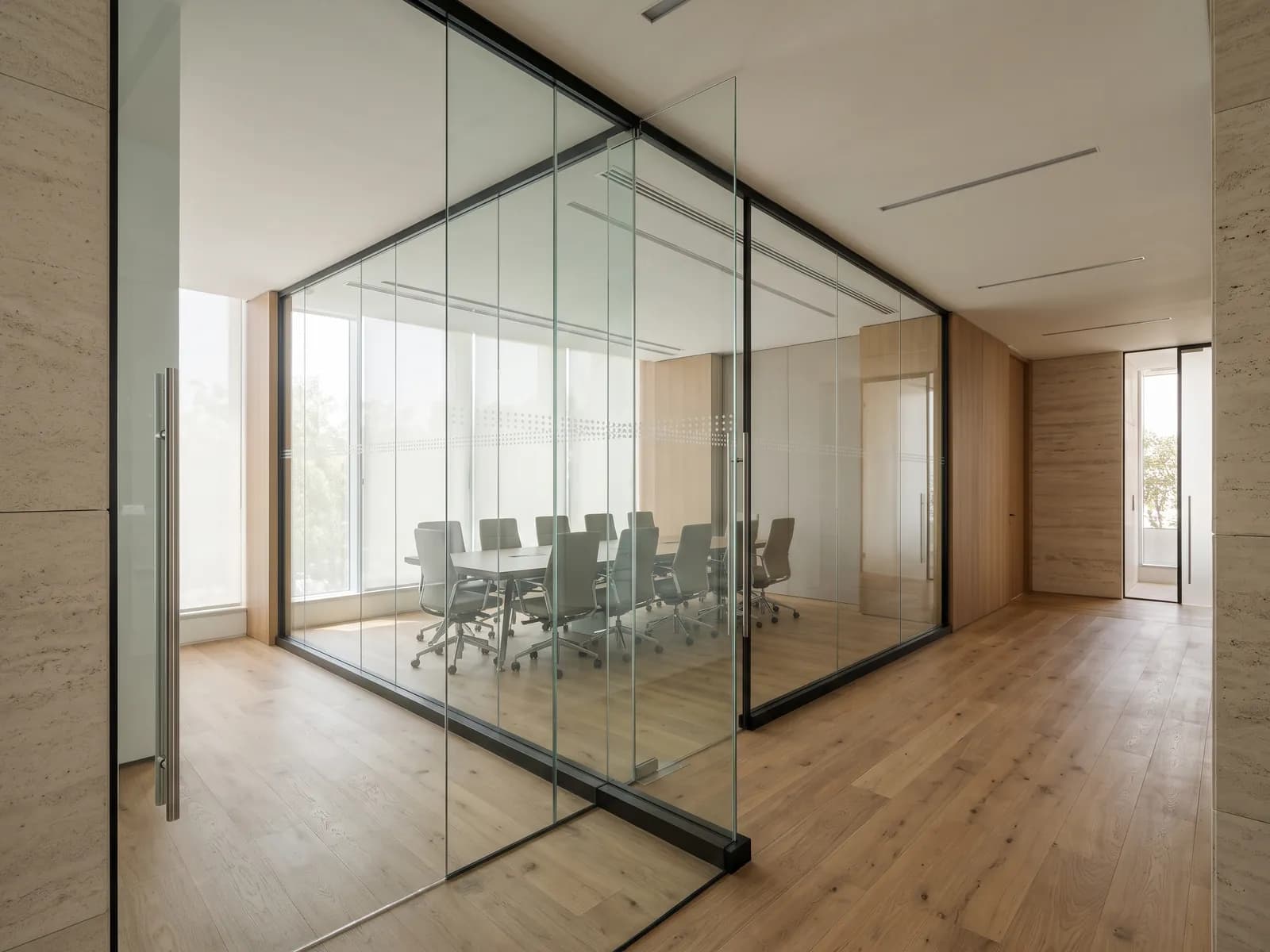
Frameless full-height office partitions are usually 10 or 12 mm tempered glass; laminated or acoustic laminated glass suits meeting rooms and partitions at a stairwell or atrium edge. Sound insulation is set by the whole system: glass, profiles, seals, door and ceiling void.
15 October 2026 · 5 min read
Request a Quote
Request a Quote